
 AI Governance
 Data Centers
 Drones
 Climate
 Privacy
 2026 Maine Senate
 Bob Dylan
El Paso Tightens Data Center Rules
Coverage from City of El Paso, El Paso Matters, and others
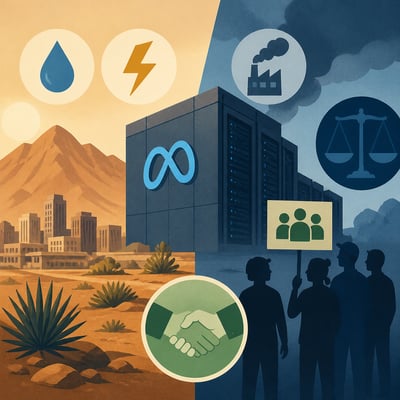
Meta is developing a large AI data center campus in Northeast El Paso, with construction, major tax incentives, and projected demands of up to 2.
5 million gallons of water per day at full buildout. Residents and local groups have raised concerns about water availability, electricity use, emissions, noise, construction impacts, and transparency, while city officials weigh the project’s tax and economic benefits against potential public costs. El Paso has responded by requiring stronger permits, disclosures, setbacks, cooling standards, and community commitments for future data centers, while existing contractual obligations to Meta remain in place.
The project is now described with more concrete implementation details and a substantially higher potential water-use ceiling, alongside newly quantified incentives and employment benefits. Organized opposition has also become more specifically identified through newly named community groups.
The main update is a sharper policy and fiscal framing: El Paso is now explicitly moving ahead with stricter rules for future AI data centers while keeping Meta's signed deal intact for legal and taxpayer-risk reasons. The story also adds a stronger emphasis on the campus's power mix, climate pressure, and the distribution of tax benefits.