
 AI Governance
 Data Centers
 Drones
 Climate
 Privacy
 2026 Maine Senate
 Bob Dylan
AI Data Centers Seek On-Site Power
Coverage from TechRepublic, Rystad Energy, and others
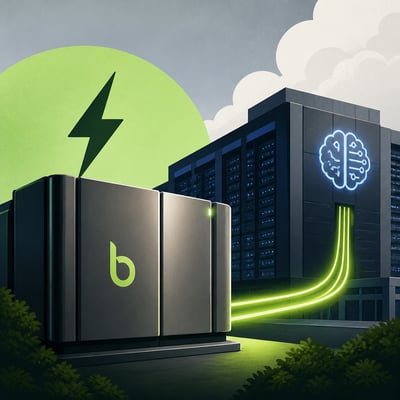
AI data center developers and power suppliers are pursuing fuel cells, natural gas plants, mobile generators, and hybrid storage to bring capacity online before conventional grid connections are available.
The shift is especially visible in North America, where large-load interconnection can take several years and off-grid projects are receiving faster approvals. These systems may shorten construction timelines, but they also create exposure to fuel costs, emissions, permitting disputes, material constraints, and reduced public oversight.
The story has shifted from a broad workaround for grid delays to a more structured infrastructure buildout, with electricity availability becoming a central constraint on AI capacity. Oracle’s expanded fuel-cell commitments and new battery, controls, cooling, and high-voltage architectures provide clearer evidence of implementation and commercial scale.
The story now places stronger emphasis on dedicated generation as an execution path for AI power, while adding a new supply-chain constraint around fuel cell scaling. It also broadens the emphasis from fuel cells and storage to include natural gas plants and mobile generators as near-term alternatives.