
 AI Governance
 Data Centers
 Drones
 Climate
 Privacy
 2026 Maine Senate
 Bob Dylan
Communities Push Back on AI Data Centers
Coverage from E&E News, Deseret News, and others
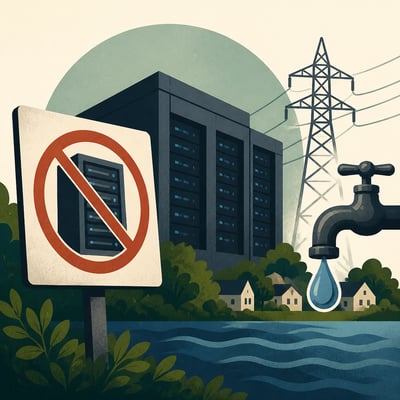
Communities and lawmakers across the United States are seeking pauses, moratoriums, studies, and disclosure requirements for AI data centers.
The main concerns are electricity demand, grid pressure, water consumption, environmental effects, noise, and the possibility that infrastructure costs will reach ratepayers. Most reported measures are proposals or local actions rather than completed nationwide policy, with Brookhaven and several New Jersey communities serving as prominent examples.
The story has shifted from a general debate over slowing AI data centers to a more concrete, nationally dispersed set of local and federal actions. Brookhaven's planned 18-month pause and the new federal study and disclosure proposals make the policy response more operational and specific.
The story has broadened from local and regional pause efforts into a more structured, multi-level policy push that now includes federal legislation, transparency mandates, and formal study requirements. New York remains central, but the addition of more lawmakers and jurisdictions shows the fight is becoming more coordinated and policy-specific.