
 AI Governance
 Data Centers
 Drones
 Climate
 Privacy
 2026 Maine Senate
 Bob Dylan
Counties Require Hearings for Data Centers
Coverage from Nevada Current, KNOP, and others
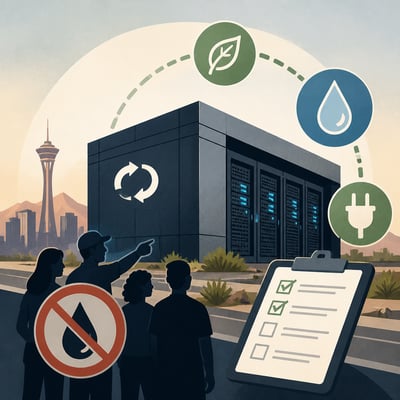
Local governments are adding hearings, conditional-use requirements, review criteria, or temporary pauses for new data centers as demand for AI-related capacity raises concerns about water, electricity, noise, and land use.
Clark County, Nevada, approved Switch’s 56,800-square-foot expansion while beginning to consider broader rules; other Nevada jurisdictions are weighing pauses, and Clark County, Ohio, has limited future facilities to conditional use in districts without currently available electric and water capacity. The shift gives counties more opportunities to impose project-specific conditions, but it can also lengthen approval timelines and expose differences in local authority and infrastructure readiness.
The story now emphasizes a broader regulatory shift: counties are not just tightening review, but in some cases pausing approvals and limiting future data centers to places with available utility capacity. It also adds a more specific operational constraint in Clark County, Ohio, where no qualifying I-2 parcels currently exist, making the restriction more immediate than before.
The story has broadened from a single Clark County approval dispute into a wider regional regulatory shift: multiple Nevada jurisdictions, plus Clark County, Ohio, are now actively tightening data center rules through pauses, conditional-use requirements, and moratorium proposals. The Clark County Switch approval remains part of the story, but it is now framed as one example of a broader move toward case-by-case scrutiny and facility-specific conditions.