
 AI Governance
 Data Centers
 Drones
 Climate
 Privacy
 Bob Dylan

Drones Quick Briefing
2026-11-21
Drone Adoption Advances, but Dependable Operations Remain Uneven
of Play
The prior picture remains broadly intact: low-cost military drones and expanding civilian services offer practical value, but resilience, adaptation and sustained integration matter more than acquisition alone. New police procurement adds local evidence of adoption rather than a major shift. The most consequential uncertainties remain whether defenses can handle faster threats and whether communications and delivery networks can provide dependable service.
What's New?
Battlefield drone advantage depends on adaptation and defenses
Ukraine’s use of inexpensive drones illustrates the value of mass and rapid iteration. Reported interceptor success against slower Shaheds does not establish comparable protection against faster jet-powered variants.

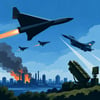
Resilience requires more than navigation without GPS
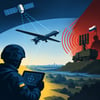
Reported satellite-link restrictions remain a separate operational concern from navigation in jammed environments. A described visual-navigation system illustrates one approach to the latter, but does not resolve communications access.
Retail delivery is expanding, but local acceptance constrains reach
Walmart’s delivery expansion and local pushback against Amazon illustrate a market moving beyond isolated pilots without establishing sustained service or viable economics across a network.


What's Changed?
Police programs gained local commitments, not a domain-wide breakthrough
Grapevine approved a five-year, approximately $1.05 million deal for three response drones and docks; UCLA received approval to expand its operational fleet from three to five. These add examples of public-safety procurement to the prior assessment, but neither establishes sustained deployment at scale. UCLA reported no non-training deployments in its latest reporting period.
What Matters?
Procurement does not by itself establish operational capacity
Grapevine’s trial suggests potential response benefits, but airport airspace restrictions constrain operations and its five-year commitment outlasts the one-year grant. The example reinforces the prior distinction between acquiring aircraft and sustaining useful service.
Navigation improvements leave other dependencies exposed
The reported GNSS-independent helicopter capability is consistent with efforts to counter electronic interference, but it does not materially change the prior assessment: reliable missions also depend on communications and service access. The report does not establish operational effectiveness at scale.
What's Next?
Can defenses intercept faster attack drones affordably?
The existing watchpoint remains unresolved. Repeated operational results and costs against jet-powered targets would show whether the reported success against slower Shaheds can be extended.
Have affected Ukrainian satellite links and missions recovered?
The prior question remains unresolved: watch for evidence of restored communications and completed missions, as well as clarification of who authorized the reported restrictions.
Can delivery networks sustain service as they expand?
Watch whether expansion produces durable service and viable economics across locations, and whether local objections or approvals slow it. No current evidence resolves this existing scalability question.