
 AI Governance
 Data Centers
 Drones
 Climate
 Privacy
 Bob Dylan

Drones Quick Briefing
2026-11-22
Drone Adoption Advances, but Reliable Operations Remain Uneven
of Play
The underlying military contest still rewards low-cost production and rapid adaptation, while defenses and communications dependencies constrain effectiveness. The clearest new evidence is civilian: police drones are handling substantial response volume, though the available data do not establish sustained benefits. Chinese discussion of delegated operations is a meaningful signal of learning, not yet proof of implementation.
What's New?
Military drone advantages remain contested
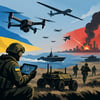
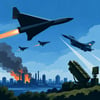
Ukraine’s use of inexpensive drones illustrates the value of mass production and rapid adaptation, but countermeasures continually challenge that advantage. Reported interception success against slower Shaheds does not establish an effective defense against faster jet variants.
Civilian deployment is expanding unevenly
Retail delivery has moved beyond isolated pilots, while local resistance constrains expansion. Police first-response programs also show operational use, though service performance and governance vary; expansion alone does not establish sustainable delivery economics or public-safety benefits.


Communications access remains a separate wartime vulnerability
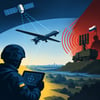
Reported satellite-link restrictions affecting Ukraine remain an unresolved operational concern. Improvements in drone navigation or autonomy would not by themselves settle questions about access to externally controlled communications services.
What's Changed?
Police response data sharpen the adoption picture
New Castle County reported six months of operations: drones arrived first at 756 of 844 dispatched calls, and 195 calls ended without a patrol car. In the busiest month, October, the first-arrival rate fell to 83.6% from 94.1% in June. This adds operational evidence to the prior picture of public-safety expansion, but does not establish why performance varied.
PLA discussion reveals interest in delegated drone operations
New reporting identifies PLA commentaries advocating greater frontline decision authority, informed in part by Ukraine’s battlefield data practices, while retaining central control of major operations. The reporting establishes a debate, not an implemented force-wide command change.
What Matters?
Operational volume is not the same as demonstrated benefit
New Castle’s results strengthen the case that police drones can be integrated into routine response, beyond previously tracked purchases and trials. But the dashboard omits flight-level response times and contains overlapping categories, limiting assessment of time savings, patrol displacement and performance under heavier demand.
China’s challenge is organizational as well as technical
The PLA debate extends the importance of Ukraine’s drone lessons beyond aircraft and sensors to command authority and shared targeting information. Whether those ideas change operational capability depends on implementation; the cited example is an exercise, not evidence of broad adoption.
What's Next?
Test the limits of Ukraine’s drone resilience
The existing watchpoints remain unresolved: look for repeatable, affordable interceptions of jet-powered drones and evidence that reliable communications and missions have returned across operations affected by reported satellite-link restrictions.
Look for sustained civilian service and measurable outcomes
For delivery, watch whether local acceptance and approvals translate expansion into sustained service with viable economics. For police response, detailed flight times, dispatch outcomes and retention policies would clarify benefits and governance as activity grows.
Watch whether PLA proposals become practice
Evidence of revised command rules, training across units or operational use of delegated drone strikes would strengthen the case for a substantive shift; continued commentary and isolated exercises would not.