
 AI Governance
 Data Centers
 Drones
 Climate
 Privacy
 Bob Dylan

Drones Quick Briefing
2026-11-23
Drone Reach Expands, While Reliable Operations Remain Contested
of Play
The reported sinking of a Russian warship in Libya adds a consequential maritime example beyond the Black Sea, though attribution remains uncertain. It does not overturn the broader assessment: military effectiveness depends on adaptation, defenses and dependable supporting systems, while commercial expansion has yet to establish sustainable network-wide service.
What's New?
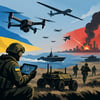
Military drone effectiveness depends on adaptation as well as mass
Ukraine’s experience points to inexpensive, mass-produced drones and rapid iteration as complementary advantages. Countermeasures also evolve: reported success against slower Shahed drones does not establish effective interception of jet-powered variants.
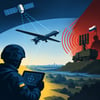
Communications access remains a separate operational vulnerability
Reported restrictions on Ukrainian satellite links leave open questions about mission effects and control over access. Improvements in drone navigation or autonomy would not by themselves resolve those dependencies.
Retail delivery is expanding, but sustainable scale remains unproven
Walmart’s delivery expansion and local pushback against Amazon illustrate competing signals: commercial deployment has moved beyond isolated pilots, but reach, sustained service and economics remain uncertain.


What's Changed?
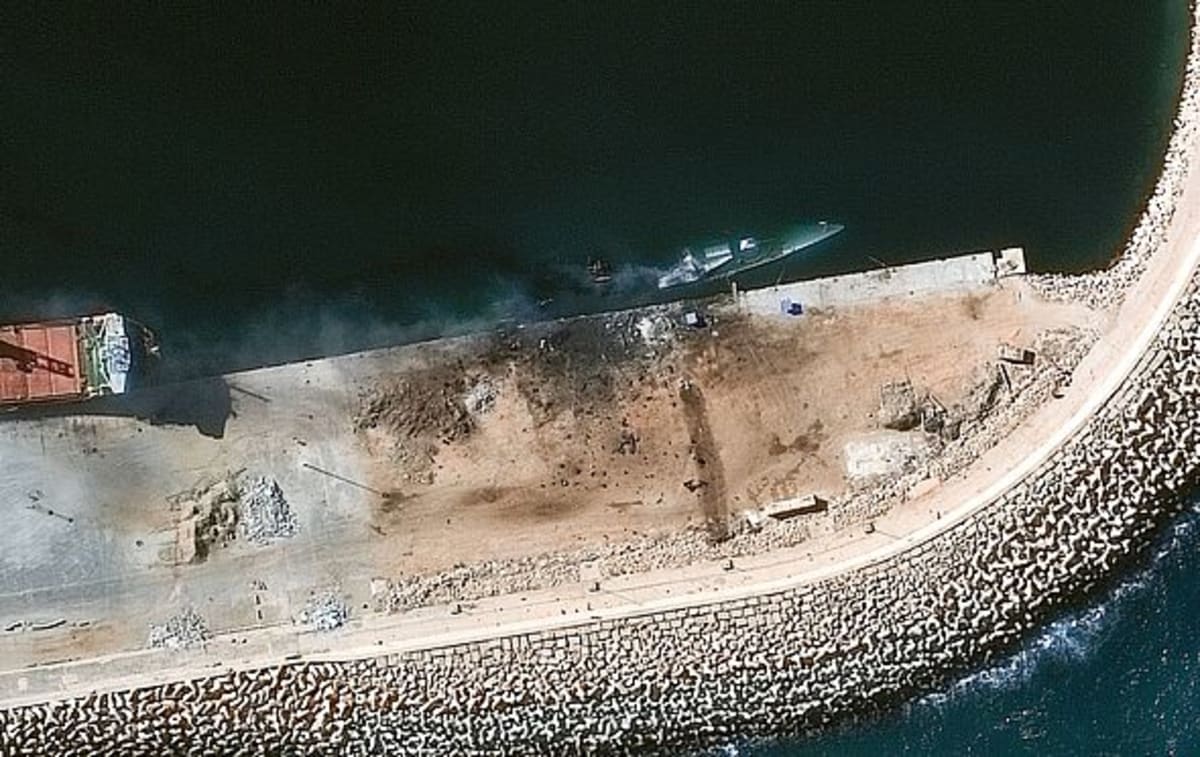
A Russian warship sank after a reported sea-drone attack in Libya
Libyan officials said sea drones struck the corvette Merkury at Benghazi; satellite imagery reportedly showed it sunk. Ukrainian responsibility is suspected but unconfirmed. A separate reported sea-drone strike hit a commercial vessel nearby.

What Matters?
The Benghazi incident extends the observed maritime threat beyond the Black Sea
The reported sinking shows that a warship at a foreign port can be vulnerable to sea drones. The reported commercial-ship strike also highlights risks to other vessels, although the attacker, launch point and relationship between the incidents remain unresolved. One operation does not establish a sustained campaign.
Defensive success is target-specific, not a settled cost advantage
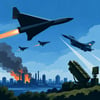
The prior assessment remains intact: inexpensive interceptors may be effective against slower drones without solving the faster-target problem. Sustaining an advantage requires adaptation as threats change, rather than assuming one successful defense generalizes.
What's Next?
Investigate attribution and repeatability of the Libya attack
Watch for investigation findings on the operator and launch point, and for further operations. Confirmed Ukrainian responsibility would strengthen the assessment of an operational reach beyond the Black Sea; a single strike alone does not establish sustained reach.
Test defenses against faster drones
The existing jet-Shahed watchpoint remains unresolved. Evidence of repeatable interceptions and their cost would clarify whether the defensive advantage reported against piston-engine drones extends to faster variants.
Clarify Ukrainian satellite-link restrictions
Watch for evidence of restored communications and completed missions, as well as who authorized the reported restrictions. The current packet does not resolve the prior question of their operational scope.