
 AI Governance
 Data Centers
 Drones
 Climate
 Privacy
 2026 Maine Senate
 Bob Dylan
AI Patterns Challenge Surveillance Cameras
Coverage from Dark Reading, TechCrunch, and others
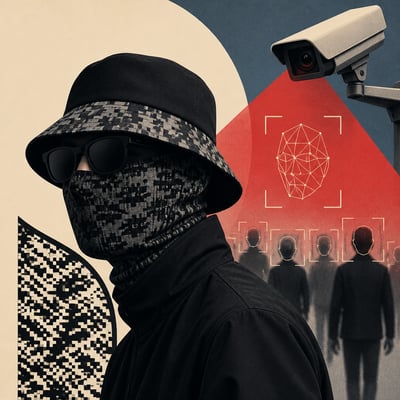
Researchers and privacy-focused designers are developing printed patterns, garments, and vehicle coverings intended to interfere with software that detects people, faces, vehicles, or license plates.
Bill Swearingen's noRecognition project reported testing roughly 31 million generated patterns against 11 open-source detection systems and demonstrated a patterned vehicle against a Flock camera, while Urban Privacy markets related anti-tracking products. The techniques do not block recording and their real-world effectiveness remains dependent on camera conditions, model updates, and the specific surveillance system involved.
The story is now backed by a reported large-scale testing effort and a public vehicle demonstration, making the counter-surveillance work more concrete. Its scope has also broadened from facial-recognition evasion to disrupting vehicle and license-plate detection, while remaining limited because cameras still record footage.
The story has broadened from a Europe-centered privacy-fashion niche into a wider anti-surveillance countermeasure trend that now explicitly includes security-research testing and U.S.-linked facial-recognition concerns. The updated framing is less about a single startup and more about varied, system-dependent tactics whose effectiveness remains uncertain.