Retail Facial Recognition Faces PushbackRetail Facial Recognition Faces PushbackCoverage from Kansas.com, Bradenton, and others
00/00/0000
DailyWeekly
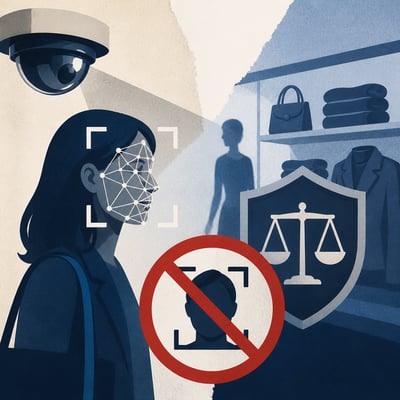
Facial recognition is being deployed or considered in grocery stores, entertainment venues, and other public-facing settings for loss prevention, security, customer identification, and potentially marketing or pricing.
The practice is drawing scrutiny over scanning people who are not suspected of wrongdoing, unclear data retention and sharing, error and bias, and the use of biometric profiles as persistent identifiers. Lawmakers in New York, Connecticut, and elsewhere are pursuing restrictions, while disputes involving Madison Square Garden and a Clearview AI criminal case are testing disclosure and accountability requirements.
Looking Back
237 Day Timeline
Articles published over time. Hover any bar for the period and its article count.
Jan 8
Feb 19
Mar 26
May 7
Jun 11
Jul 23
Aug 27
History
09/09/2026
The story now gives greater prominence to Madison Square Garden, adding disputes over attendee databases, alleged targeting, and a related data breach. This makes data exposure and venue accountability more concrete, while the broader deployment and legislative picture remains largely unchanged.
08/24/2026
The story has broadened from targeted theft prevention and investigative use to include customer profiling and marketing, while regulatory restrictions and court-ordered disclosure efforts have intensified.
Grocery Outlet is using SAFR Guard facial recognition at Bay Area store entrances, prompting consent concerns among California customers and comparisons with Wegmans and Rite Aid practices.
8/6/2026 • Data Collection & Surveillance Practices • General
Grocery Outlet deployed SAFR Guard facial recognition at some Bay Area stores, where entrance scans support security watchlists despite customer concerns about consent and data control.
8/6/2026 • Data Collection & Surveillance Practices • General
Syracuse lawmakers proposed a ban on business biometric surveillance and facial recognition data collection after a privacy expert cited misidentification, bias, and misuse risks.
5/14/2026 • Data Collection & Surveillance Practices • General
Grocery Outlet deployed SAFR Guard facial recognition at Bay Area stores, where customer images are compared with a security watchlist under California privacy rules.
Grocery Outlet began SAFR Guard facial recognition rollouts in Bay Area stores to prevent shoplifting, prompting privacy-advocacy concerns about biometric surveillance and disclosure.
Neal Kravitz ordered prosecutors in Washington, D.C. to disclose Clearview AI facial recognition steps used to arrest Marquis Foster, with a July 22 hearing scheduled.
7/8/2026 • Regulation, Law & Enforcement • General
New Jersey Supreme Court ordered prosecutors to disclose facial recognition tools, manufacturer details, error-rate information, and probe photos in State v. Tybear Miles after a 2021 Jersey City shooting.
6/26/2026 • Regulation, Law & Enforcement • General
New Jersey Assembly Bill 3929 would require notice and restrict biometric surveillance and profit from collected biometric identifiers by commercial businesses using facial recognition.
5/9/2026 • Regulation, Law & Enforcement • General
New York City Council Member Shahana Hanif proposed Intro. 0213 in 2020s New York City to require public accommodations to obtain consent before collecting biometric data.
9/1/2026 • Regulation, Law & Enforcement • General
New Jersey Supreme Court ordered prosecutors to disclose facial recognition software details, error rates, and match images in a Jersey City murder case involving Tybear Miles.
6/25/2026 • Regulation, Law & Enforcement • General
Grocery Outlet deployed SAFR Guard facial recognition at Bay Area store entrances, where biometric scanning has raised consent concerns among California shoppers.
Grocery Outlet deployed SAFR Guard facial recognition at Bay Area store entrances, prompting consent concerns because California customers cannot prevent scanning in advance.
Grocery Outlet recently deployed SAFR Guard facial recognition at Bay Area store entrances to identify watchlisted individuals, prompting concerns about consent and consumer choice.
Grocery Outlet uses SAFR Guard facial recognition at Bay Area store entrances, prompting concerns about biometric consent, image handling, and customer choice in California.
Grocery Outlet deployed SAFR Guard facial recognition at Bay Area store entrances, where customer scans are compared with security watchlists despite limited ability to refuse initial collection.
Grocery Outlet deployed SAFR Guard facial recognition at Bay Area store entrances, where customer images are compared with security watchlists and cannot be refused in advance.
Grocery Outlet deployed SAFR Guard facial recognition at Bay Area stores in 2025, scanning customer faces against theft and violence watchlists while retaining biometric data under SAFR policy.
Tony Simone and Rachel May sponsor a New York bill restricting facial recognition and biometric surveillance in public venues after MSG-linked breach reporting and litigation.
Grocery Outlet deployed SAFR facial recognition in the San Francisco Bay Area to deter shoplifting, and privacy experts criticized broad customer tracking despite claims of limited data sharing.
Blake Hunter Yagman said potential civil-rights concerns remain after a reported Madison Square Garden facial-recognition visitor data breach led to multiple class actions in New York City.
Grocery Outlet deployed SAFR facial recognition in Bay Area stores in response to shoplifting, raising privacy and accuracy concerns among experts and shoppers.
Grocery Outlet in California planned SAFR facial recognition deployments at stores to identify suspected shoplifters, raising privacy and profiling concerns from customers and digital privacy experts.
New York City lawmakers held a March 2 hearing on a bill to ban facial recognition in supermarkets amid concerns about biometric profiling, surveillance pricing, and discrimination risks.
Lavinia McIntyre reported a facial recognition misidentification at a Budgens store in Buckinghamshire in January as UK retailers expand private biometric surveillance.
Sainsbury's expands Facewatch live facial recognition to up to 200 UK stores by late 2026, prompting Big Brother Watch criticism over false positives and privacy rights impacts.
New Jersey Supreme Court ordered prosecutors in Tybear Miles criminal case to disclose facial recognition software details and performance metrics, limiting demands for source code without demonstrated need.
New York City Mayor Zohran Mamdani's administration and Council supporters backed bills Friday to restrict businesses' facial recognition use across New York City.
8/15/2026 • Regulation, Law & Enforcement • General
New York City lawmakers and Consumer Affairs Commissioner Sam Levine are pursuing restrictions on facial recognition at Madison Square Garden venues this week.
8/15/2026 • Regulation, Law & Enforcement • General
Shahana Hanif, privacy advocates, and musicians rallied Friday in New York City for legislation banning facial recognition at Madison Square Garden and other public venues.
8/14/2026 • Regulation, Law & Enforcement • General
New York Liquor Authority withdrew facial recognition-related charges tied to MSG Entertainment exclusion practices and fined Dolan-controlled venues $30,000 after a penalty ruling.
7/22/2026 • Regulation, Law & Enforcement • General
New York lawmakers Tony Simone and Rachel May propose limits on facial recognition biometric surveillance after controversy involving a leaked Madison Square Garden VIP database.
7/20/2026 • Regulation, Law & Enforcement • General
Erie County Executive Mark Poloncarz signed a law on April 30 banning most private biometric collection in Erie County, New York, amid concerns about retail facial recognition and government access.
8/19/2026 • Regulation, Law & Enforcement • General
New York demonstrators and lawmakers rallied Friday outside Madison Square Garden in Manhattan against facial-recognition scanning at entertainment venues.
Grocery Outlet deployed SAFR Guard facial recognition at Bay Area store entrances, prompting concerns about consent and biometric data rights under California privacy law.
Grocery Outlet installed SAFR facial recognition in select California stores, and shopper reactions highlighted privacy concerns about biometric scanning and misidentification risk.
New York City policy discussions would limit biometric facial recognition in stores after public concern, FTC enforcement against Rite Aid, and calls for stronger restrictions on biometric surveillance.
Erie County, New York, passed a Biometrics Transparency and Privacy Act restricting retailers from collecting and using biometric data via facial recognition, affecting Wegmans.
4/30/2026 • Regulation, Law & Enforcement • General
Syracuse Common Council approved a facial recognition and biometric screening ban on public-facing establishments, pending Syracuse Mayor Sharon Owens public hearing and decision.
5/19/2026 • Regulation, Law & Enforcement • General

 AI Governance
 Data Centers
 Drones
 Climate
 Privacy
 2026 Maine Senate
 Bob Dylan