
 AI Governance
 Data Centers
 Drones
 Climate
 Privacy
 2026 Maine Senate
 Bob Dylan
Milwaukee Law Enforcement Facial Recognition
Coverage from Wisconsin Watch, Milwaukee Journal Sentinel, and others
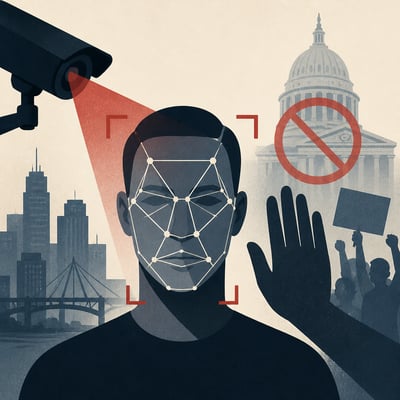
Milwaukee law-enforcement agencies are weighing or pursuing facial-recognition capabilities while officials, residents, and civil-liberties advocates press for stronger policies, transparency, and limits on data sharing.
The Milwaukee Police Department has paused its use pending a formal policy, but the Milwaukee County Sheriff’s Office is negotiating a potential Biometrica UMbRA agreement that could expand access to biometric records. The broader debate also includes concerns about false matches, racial bias, public notice, and federal immigration agencies’ use of similar tools.
The story has become more concrete on the county side: Milwaukee County Sheriff’s Office has now signed a letter of intent with Biometrica, but the deal is still not finalized and needs county executive approval. The current reporting also adds more specific operational and federal-facing details, including how UMbRA would work and heightened scrutiny of DHS/ICE facial-recognition use.
The story has broadened from local Milwaukee facial-recognition backlash into a more explicit governance-and-litigation dispute, with new emphasis on policy reviews, procurement pauses, and related federal court and ordinance fights. The current version also adds a new advocacy actor and frames the issue as an ongoing structural clash over identity exposure and surveillance risk.