
 AI Governance
 Data Centers
 Drones
 Climate
 Privacy
 2026 Maine Senate
 Bob Dylan
Apple Siri AI Privacy Tradeoffs
Coverage from Gadget Hacks, Gizmodo, and others
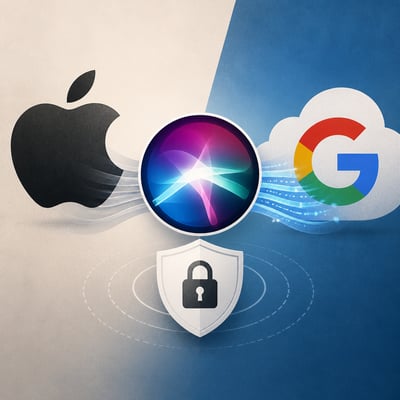
Apple is turning Siri from a command-based assistant into a context-aware system that can search personal content, analyze screens, and act across applications.
The design combines on-device processing with Private Cloud Compute and reported Google Gemini support, while fragmented controls, uncertain data-routing details, regulatory delays, and prompt-injection risks complicate Apple’s privacy assurances.
If you read one thing
It provides the clearest broad overview of Siri’s cross-app access, prompt-injection risks, and regionally limited rollout.
The counter-case
It presents Apple’s strongest safeguards case, covering on-device processing, Private Cloud Compute, encrypted logs, and stated limits on data use.
The evidence
It adds specific evidence about limited processing visibility, absent app-level controls, and the security risks created by agentic access.
Cross-app access raises the privacy stakes
Siri is being rebuilt as an agentic assistant that can use messages, mail, photos, calendars, on-screen content and other device data to complete tasks. The central privacy issue is therefore operational access to broad personal context rather than isolated voice requests.
Hybrid processing is paired with fragmented controls
Apple’s privacy posture relies on on-device processing where possible, Private Cloud Compute or encrypted cloud services for other requests, and user controls over chat retention. Visibility and control remain uneven: users may not receive clear real-time routing information and lack a universal app-level block or on-device-only setting.
Agentic operation creates indirect disclosure risks
Security concerns extend beyond storage and encryption because untrusted email, web content or other inputs could influence an assistant with access to private data and cross-service actions. Prompt injection, inaccurate actions and accountability for resulting disclosures remain unresolved.
External model partnerships complicate data governance
Reported Google Gemini integration makes Siri’s privacy posture dependent on third-party model routing, handling practices and auditability alongside Apple’s own controls. The key unresolved issue is transparency over which requests leave Apple-managed processing environments.
Regulatory requirements constrain regional availability
The Siri redesign is not a uniform global rollout: reporting describes delays or limitations in the European Union and China as regulatory and market-access requirements are addressed. Regional constraints therefore shape where the expanded architecture and capabilities can be deployed.
Contested Issue
Do Apple's on-device processing and Private Cloud Compute safeguards adequately protect personal data as Siri gains cross-app, agentic access?
Apple's stated architecture and supporting coverage present on-device processing, Private Cloud Compute, encryption, restricted data use, and external verification as meaningful privacy safeguards. Other coverage argues that Siri's access to sensitive app content and untrusted email or web text creates prompt-injection, disclosure, visibility, and control risks that those safeguards may not adequately address.
Safeguards substantially protect data
Hybrid processing, limited-use assurances, encryption, and external verification substantially mitigate privacy risks while enabling more capable Siri functions.
Expanded access leaves material risks
Cross-app access to sensitive content and untrusted email or web text creates prompt-injection and disclosure risks, while limited processing visibility and fragmented controls weaken the practical protection provided by Apple's safeguards.
The new members do not establish a material change beyond the previously documented concerns about Siri’s access to sensitive content, cloud processing, and fragmented privacy controls.
Previously
Apple is rebuilding Siri as a more conversational, task-oriented AI assistant across its device ecosystem, with iOS 27 as the primary launch vehicle. The design combines on-device models with Private Cloud Compute and may use Google Gemini or other external models for more complex requests, while adding chat-history controls and deeper access to messages, mail, photos, calendars, and on-screen content. Apple's privacy claims remain central, but the expanded data access introduces security questions, including prompt-injection risks and uncertainty over how the system will operate across regulatory environments.
The story is reframed from a planned Siri redesign toward a context-aware system whose privacy and regulatory constraints are now more prominent. The update adds clearer emphasis on third-party processing, fragmented controls, and EU regulatory involvement, while largely confirming previously reported capabilities and risks.
The biggest change is that Siri’s overhaul is now framed as a broader, more concrete product rollout tied to iOS 27, with explicit mentions of chat-history controls and multiple external AI integrations. The privacy story also sharpens from general concern to specific operational questions about retention, regional availability, and indirect prompt-injection risk.