
 AI Governance
 Data Centers
 Drones
 Climate
 Privacy
 2026 Maine Senate
 Bob Dylan
Home Cameras Expand Surveillance Reach
Coverage from CNN, KEYT, and others
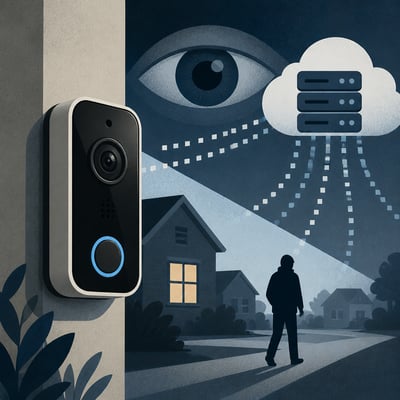
Cloud-connected doorbells and home security cameras are becoming everyday tools for monitoring homes, while their footage can also enter provider systems, law-enforcement workflows and AI-based analysis.
Reporting highlights uncertainty around retention, access and data sharing, alongside growing public concern over Ring partnerships, facial recognition and the use of surveillance imagery as social-media content. The central issue is how consumers can balance security benefits with control over recordings that may capture household activity and nearby public spaces.
The story now places greater emphasis on how consumer camera footage is actively entering law-enforcement and social-media workflows, not just being stored or shared by vendors. It also broadens the privacy discussion toward AI analysis and public-facing self-expression, while keeping Ring, Nest and Flock central.
The story broadens from a narrow focus on doorbell-camera retention and access problems to a wider smart home privacy issue. New emphasis falls on AI recognition, networked vendor sharing, and non-camera devices like voice assistants and sensors.