
 AI Governance
 Data Centers
 Drones
 Climate
 Privacy
 2026 Maine Senate
 Bob Dylan
Federal Voter Database Privacy Dispute
Coverage from SCOTUSblog, Democracy Docket, and others
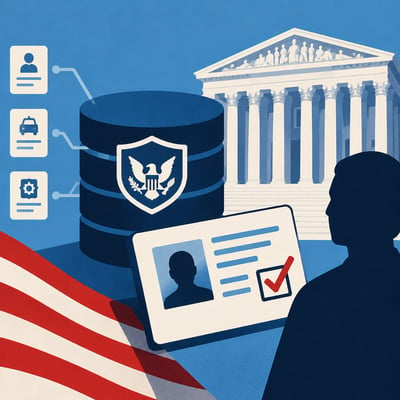
The Supreme Court temporarily allowed states to use DHS's modified SAVE database for voter citizenship checks while legal challenges continue.
The expanded system draws on federal records, and Texas investigations have found citizens among people it flagged, leaving privacy, accuracy, and legal-authority questions unresolved.
If you read one thing
It gives the clearest broad introduction to the interim ruling and the unresolved privacy and voter-accuracy concerns.
Best explainer
It adds legal detail on the Court’s reasoning and the opposing view about authorization and risks to eligible voters.
The evidence
It contributes quantified findings on mistaken voter flags and additional reporting on the system’s expanded data use.
Interim permission, unresolved legal challenge
The Supreme Court’s interim order permits use of the modified SAVE system for voter checks after pausing a lower-court block. The underlying challenges to the system’s legality have not been finally resolved.
Expanded use of sensitive federal records
The modified SAVE system broadens voter checks to include records of U.S.-born citizens and Social Security numbers. Whether this use complies with privacy and confidentiality laws remains disputed.
Erroneous flags threaten eligible voters
Texas investigations found that some people flagged by SAVE as potential noncitizens were citizens; one report cites at least 578 confirmed citizens among those identified. This makes verification safeguards and the risk of burdening eligible voters central to the system’s use.
90 days
period before federal elections during which systematic voter-roll removals are barred
“The opinion noted that the National Voter Registration Act bars systematic voter-roll removals in the 90 days before federal elections, but said the restriction does not bar individualized inquiries during that period.”
2,724
potential noncitizens identified on Texas’s voter-registration list
“Texas was the first state to use the modified system. It reported that SAVE identified 2,724 potential noncitizens on its voter-registration list. Subsequent investigations by county officials confirmed that at least 578 were citizens, an error rate of at least 21% among those identified.”
at least 21%
error rate among people identified by SAVE
“Texas was the first state to use the modified system. It reported that SAVE identified 2,724 potential noncitizens on its voter-registration list. Subsequent investigations by county officials confirmed that at least 578 were citizens, an error rate of at least 21% among those identified.”
at least 578
people identified by SAVE who county officials confirmed were citizens
“Texas was the first state to use the modified system. It reported that SAVE identified 2,724 potential noncitizens on its voter-registration list. Subsequent investigations by county officials confirmed that at least 578 were citizens, an error rate of at least 21% among those identified.”
No material change is established: there are no new-member articles to show a development since the prior state.
Previously
The Supreme Court temporarily allowed states to use DHS's modified SAVE database for voter citizenship checks while legal challenges continue. The expanded system draws on federal records, and Texas investigations have found citizens among people it flagged, leaving privacy, accuracy, and legal-authority questions unresolved.