Last Update: 08/01/2026 at 1:34 PM EST

China Tightens Rules for AI Companions

Coverage from The Conversation, The Intelli Home, and others

Articles

8

Active Days

67

The Topic

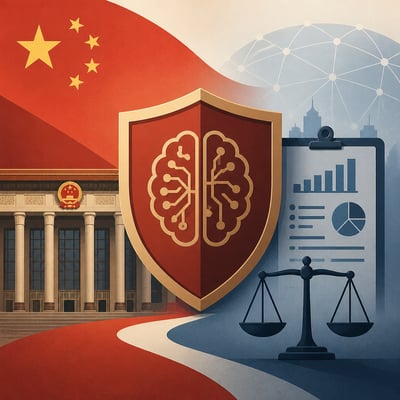
China Tightens Rules for AI Companions topic image

China’s Interim Measures for Anthropomorphic AI Interaction Services took effect on July 15, 2026, imposing safety assessments, algorithm filings, disclosure, anti-addiction controls, crisis safeguards, data protections, and heightened restrictions for minors on services designed for sustained emotional interaction. Reports indicate that major platforms including ByteDance and Alibaba rolled back or shut down companion features as the rules took effect, suggesting that compliance can affect product architecture built around persistent memory and relationship continuity. The development forms part of a wider divergence in AI oversight, with China emphasizing content and social-risk controls, the EU using a risk-based compliance model, and the United States relying in the cited framework on voluntary pre-release evaluation.

First Article: 05/18/26

Latest Article: 07/23/26

Summary

  • China’s rules cover AI services that simulate human personality and communication styles for ongoing emotional interaction, while generally excluding ordinary work, education, research, and non-emotional customer-service tools.
  • Providers must conduct safety assessments, file algorithms at defined launch or user thresholds, disclose that users are interacting with AI, detect emotional distress or dependence, and provide crisis-response and exit mechanisms.
  • The measures impose stronger protections for minors, including age verification, guardian consent for younger users, minor modes, parental controls, and a ban on virtual intimate relationships for minors.
  • Interaction data must be protected with encryption and access controls, and sensitive interaction data cannot be used for model training without separate consent or legal authorization.
  • Reports describe companion-feature shutdowns or rollbacks by Doubao, Qwen, Tencent, and NetEase Cloud Music as the rules took effect.
  • The requirements may conflict with product designs based on persistent memory, stable personas, and continuous emotional engagement.
  • China’s targeted regime contrasts with the EU’s risk-based AI Act implementation and the voluntary U.S. pre-release evaluation framework described in the material.

History

07/23/2026

The main update is clearer evidence of implementation effects: major platforms reportedly rolled back or shut down companion features as the rules took effect. The framing also tightens around disclosure, minors, and product designs built on persistent memory and continuous emotional engagement.

07/23/2026

The story has shifted from a broad description of China’s emerging companion-AI rules to confirmation that the measures are now in force and are being actively enforced. The current version also adds a broader comparative frame, contrasting China’s approval-and-filing approach with U.S. and EU AI oversight models.

Full History

Featured

Timeline: 67 Days

May 18Jun 1Jun 15Jun 22Jul 6Jul 20

Additional Articles

⭐⭐⭐⭐⭐

PLOS ONE / Zhang S, Zhang T, Wang X06-05-2026
Researchers use a Policy Modeling Consistency index to assess 54 Chinese central AI policy documents from 2016 to 2025, finding weaknesses in planning, coordination, and incentives.
TechTimes / Jackie Manning07-15-2026
China's Cyberspace Administration issued interim anthropomorphic AI service rules effective July 15, 2026, requiring anti-addiction, disclosure, and minor safeguards that led ByteDance and Alibaba to roll back companion features.
Latham & Watkins07-08-2026
On July 15, 2026, China will apply interim measures for AI human-like interaction services requiring safety assessments, provincial filings, and enhanced minor and elderly protections.
IAPP / Joe Duball07-15-2026
China’s Cyberspace Administration enforces interim rules for anthropomorphic AI emotional interaction services effective July 15, adding distress detection, crisis intervention, and data limits.

⭐⭐⭐

Jawlah05-18-2026
China's State Council outlines accelerated drafting of a unified AI law in its 2026 legislative work plan, expanding oversight of AI data, algorithms, compute, cybersecurity, and IP.