
 AI Governance
 Data Centers
 Drones
 Climate
 Privacy
 2026 Maine Senate
 Bob Dylan
When AI Access Becomes Export Control
Coverage from The Verge, Vox, and others
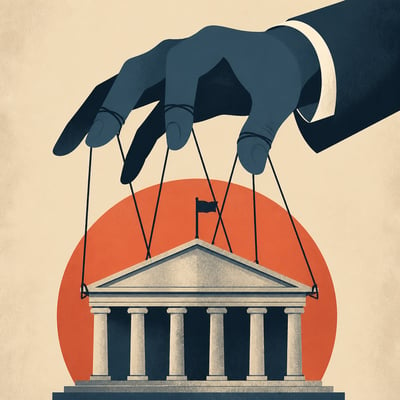
The central development is the use of U.
S. export-control authority to restrict foreign-national access to Anthropic’s hosted frontier models, followed by a rapid reversal that exposed uncertainty over how existing controls apply to cloud-based AI services. The episode has intensified European and broader international concerns about dependence on U.S. models, cloud infrastructure, and unilateral access decisions, while prompting discussion of procurement continuity, sovereign compute, and allied coordination. Separate regional and international initiatives show governments and financial authorities seeking more structured oversight of AI risks, but approaches remain fragmented and difficult to verify.
The story broadens beyond the Anthropic access dispute into more concrete regional and international AI-governance efforts, adding Asia-Pacific financial authorities, African capacity-building initiatives, and a detailed frontier-AI oversight proposal.
The story adds a sharper framing that the export-control order targeted hosted AI access itself, not just model assets, and it broadens the response beyond Europe to Africa and Asia-Pacific. The latest version also emphasizes that governments are now building concrete resilience measures around procurement, infrastructure, and coordination.
The story has moved from a one-way U.S. restriction and Anthropic shutdown to a partial reversal, showing that access controls on frontier models were temporary and operationally unsettled. At the same time, the episode has broadened into a wider policy debate on European sovereignty and financial-system resilience.
- Restrictions were later lifted or narrowed by Commerce.
- Anthropic restored Fable access globally.
- Mythos access was restored in stages.
- European officials linked the episode to technological sovereignty.
- Financial regulators are addressing AI systemic risks.
The main update is a reframing: the current version sharpens the trigger as an alleged jailbreak/guardrail bypass and adds that the dispute is now also about predictable rules for commercial AI developers. It also broadens the story slightly by adding foreign and European concerns about U.S. intervention and model diversification.
The story has shifted from a general warning about U.S. export controls affecting European AI access to a concrete U.S. enforcement action against Anthropic’s models, with broader fallout over frontier-model availability and safety governance. It also now includes Anthropic’s active push for stricter state-level audits, which reframes the company as both regulated entity and policy advocate.
- Commerce restricted non-U.S. nationals’ access to Mythos 5 and Fable 5.
- Anthropic shut down both models for all customers to comply.
- The Pentagon dispute and supply-chain-risk designation are now part of the story.
- Anthropic backs tougher state rules on third-party audits and deployment controls.
- Critics say the move resembles an ad hoc licensing system.
The story has sharpened from a general push for AI sovereignty into a more concrete European policy package centered on supply-side controls, especially the proposed Cloud and AI Development Act. US restrictions affecting Anthropic are now framed as the clearest trigger, making access continuity and procurement leverage more urgent than before.
- Proposed Cloud and AI Development Act introduces tiered sovereignty requirements.
- EU framing now centers on supply-side controls for cloud, compute, and frontier access.
- Anthropic restrictions are described as the clearest trigger for Europe’s debate.
- ENISA and Henna Virkkunen appear in the EU sovereignty implementation discussion.
The story has shifted from a dispute over access restrictions on Anthropic models to a broader policy push for AI and cloud sovereignty. The new emphasis is on concrete procurement and infrastructure rules in Europe and Africa to reduce dependence on foreign providers and export-control exposure.
- EU procurement is becoming the main lever for cloud and AI sovereignty.
- The EU AI Act is seen as insufficient for continuity planning.
- African governments are pursuing sovereignty strategies for AI access and infrastructure.
- Compute constraints now include chips, energy supply, and financing.
- Sovereignty tiers may outpace what vendors can currently provide.
The story sharpened from a general sovereignty-and-access concern into a specific dispute over US export controls on Anthropic’s frontier models, revealing how national security tools can directly limit foreign access to advanced AI systems. It also adds a clearer split between federal pressure, voluntary safety testing, and fragmented state or international responses.
- US authorities restricted access to Anthropic’s most capable models.
- The company was forced to disable access more broadly.
- Critics called the restriction response ad hoc and inconsistent.
- Military and national security AI became a distinct flashpoint.
- State-level AI laws are now part of the policy split.
The story has broadened from Europe-centric sovereignty planning into a more explicit global governance problem, with African states and regional institutions now more central. The biggest new wrinkle is that US restrictions on Anthropic have made continuity and foreign access risk more immediate, not just theoretical.
- African Union and Smart Africa are now listed as key actors.
- Europe is described as building tiered cloud-assurance procurement rules.
- US restrictions on Anthropic model access are now a specific recent trigger.
- African states are drafting sovereignty strategies around compute, data, and vendors.
- Domestic capacity constraints are now highlighted as a major implementation risk.
The story now places much more emphasis on concrete implementation constraints and policy mechanics, not just sovereignty rhetoric. It also broadens slightly from Europe/Africa framing to a more explicit transatlantic regulatory and security context.
The story has broadened from mainly European sovereignty controls and U.S.-driven access risk to a more explicit Africa-wide governance and capacity-building push. It now emphasizes operational tools—procurement screening, local compute, and regional coordination—rather than just the abstract sovereignty debate.
- Regional African coordination through strategy documents, councils, and funding initiatives.
- Nigeria, Kenya, Egypt, and South Africa now appear as specific sovereignty-policy examples.
- Europe’s sovereignty agenda now explicitly includes assurance tiers and procurement screening.
- Compute capacity and chip access are now highlighted as major bottlenecks.
The story has sharpened from a broad sovereignty theme into a more specific EU procurement-and-infrastructure regime, with explicit tiered controls and certification/audit requirements now central. The other notable change is that U.S. export controls are no longer just a trigger for concern; they are now framed as concrete evidence of continuity risk for European users.
The story has broadened from a sovereignty debate driven mainly by U.S. Anthropic restrictions and African policy responses into a more explicit policy push around tiered EU cloud/AI procurement rules and African regional funding and infrastructure buildout. The new version also sharpens the central tension between security-driven control and real-world access to frontier models and services.
- Tiered EU sovereignty rules are being tied to cloud and AI procurement conditions.
- Public procurement is emerging as an enforcement lever for sensitive AI workloads.
- African states are pursuing regional funding for AI capacity.
- Foreign-user access to frontier models can change quickly under export controls.
The story has shifted from a broad sovereignty and procurement debate to one driven more clearly by U.S. export-control pressure, especially around Anthropic model access. Europe’s response is now framed less as general AI regulation and more as procurement-based control of model, cloud, and compute access.
- U.S. Commerce export-control action targeting Anthropic models.
- European response framed as procurement-based sovereignty tools.
- Cloud, compute, and chip capacity treated as governance issues.
- African policies now emphasize local talent alongside data sovereignty.
Governments in Europe and Africa are tightening AI sovereignty rules by linking public procurement, cloud access, and infrastructure policy to domestic control, data residency, and reduced dependence on U.S. technology providers.