
 AI Governance
 Data Centers
 Drones
 Climate
 Privacy
 2026 Maine Senate
 Bob Dylan
Trump Delays Frontier AI Testing
Coverage from The Next Web, Mandatory, and others
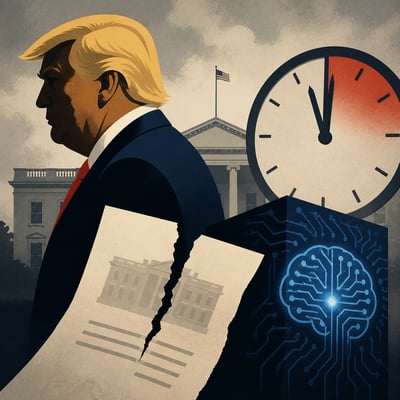
The Trump administration postponed or withdrew a planned executive order that would have formalized federal evaluation of advanced AI models before public release.
Reporting describes a White House divide between officials seeking voluntary, industry-friendly testing to preserve U.S. competitiveness and national security officials pressing for stronger government review of high-risk systems. With no replacement framework finalized, AI companies face continued uncertainty while states and foreign regulators advance their own requirements.
The main change is that the story now frames the administration’s action less as a simple delay and more as a cancellation or withdrawal of the planned AI order, with no replacement framework finalized. It also adds a stronger regulatory-competition dimension, showing pressure from states and foreign regimes while Washington remains split over how much oversight to impose.
The new version adds a sharper account of what the delayed order would have done and why it is stalled: federal pre-release testing would have centered on cybersecurity and frontier-model scrutiny, but internal White House and Commerce disagreements left that framework unresolved. It also reframes the stakes upward by emphasizing model vulnerability concerns and the lack of a settled federal role for CAISI.