
 AI Governance
 Data Centers
 Drones
 Climate
 Privacy
 2026 Maine Senate
 Bob Dylan
Ohio Blocks Clean Energy as Demand Rises
Coverage from Ohio Capital Journal, Heatmap, and others
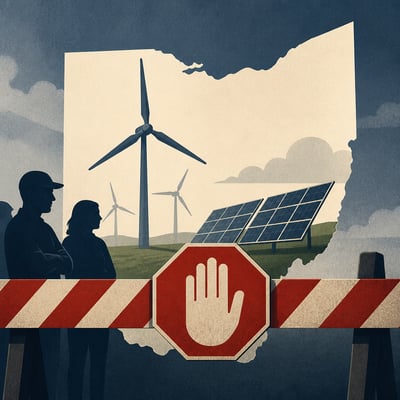
Ohio has made utility-scale wind and solar projects harder to build through setback rules, county restrictions, permitting decisions, and strong local opposition.
Analysts and clean-energy advocates say more than 5.3 gigawatts of potential renewable capacity has been blocked or withdrawn, limiting low-cost power options as data centers increase electricity demand. The state is simultaneously approving behind-the-meter natural gas plants with battery storage, while disputes continue over farmland use, local authority, grid needs, and consumer costs.
The story now more explicitly links Ohio’s renewable siting constraints to the state’s fast-growing data center load, while adding that regulators are still approving some projects and new behind-the-meter gas-and-battery builds. The update also sharpens the framing around New Albany and the Meta-linked project as a live example of how new demand is being met.
The story now puts more emphasis on the growing electricity and water strain from data centers and on Ohio’s approval of behind-the-meter natural-gas plants as an alternative supply path. It also broadens the framing from renewable siting restrictions alone to the wider power-mix and local-control debate.