
 AI Governance
 Data Centers
 Drones
 Climate
 Privacy
 2026 Maine Senate
 Bob Dylan
California Batteries Expand Amid Grid Pressures
Coverage from E3, Heatmap, and others
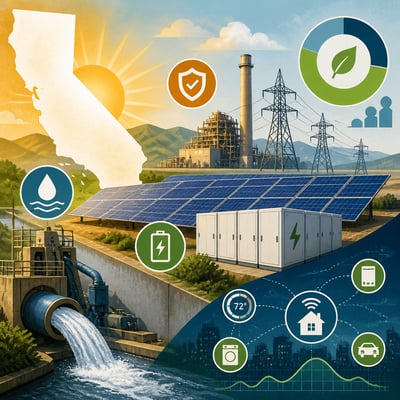
California is expanding battery storage, virtual power plants, and renewable power to reduce reliance on natural gas and support growing electricity demand.
Batteries supplied about 40% of evening demand during a late-March event, while distributed resources are being used to provide additional grid capacity. Progress is accompanied by funding uncertainty, high system costs, permitting and transmission constraints, climate-related stresses, and disagreement over how demand-response programs should be administered.
The main update is a sharper emphasis on California’s expanding use of demand-side resources: the story now highlights measurable late-March battery performance and a much larger, more explicit role for the Demand-Side Grid Support program. It also reframes the policy fight around a possible shift from the CEC program to a utility-run alternative after 2026.
The story is largely unchanged, but it now frames California’s clean-energy buildout more explicitly around rising demand pressures and the execution risk around funding and integrating virtual power plants. The updated version slightly downplays the earlier emphasis on climate-driven reliability threats and shifts the focus toward affordability, permitting, and infrastructure constraints.