
 AI Governance
 Data Centers
 Drones
 Climate
 Privacy
 2026 Maine Senate
 Bob Dylan
Façade Solar Panels Cut Building Demand
Coverage from Nature Climate Change, EurekAlert!, and others
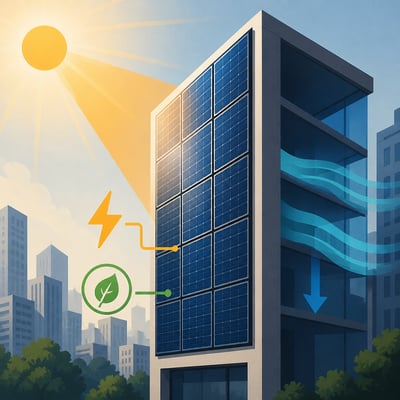
A study led by researchers at the Chinese Academy of Sciences models façade-integrated photovoltaics as a way to use building walls for solar generation while reducing heat absorption and cooling demand.
Under a plausible deployment scenario, the systems could generate about 732.5 TWh of electricity annually and reduce building electricity demand by an average of 8.1%. The study also projects substantial emissions reductions under high adoption, but emphasizes that results depend on building form, climate, socioeconomic conditions, and locally tailored policies.
The story is now more specific about the modeled emissions upside, adding a large mid-century CO2 avoidance estimate and sharpening the policy message. It also frames the study as a global assessment published in Nature Climate Change, while keeping the core finding of strong, location-dependent benefits unchanged.
The story shifts from a broad framing of façade solar as a promising urban decarbonization option to a more specific emphasis on its modeled cost and climate benefits, especially how those benefits vary by city form and deployment context. The underlying evidence base remains the same, but the current version more clearly broadens the claimed outputs beyond power and cooling to economics and mid-century emissions impact.