
 AI Governance
 Data Centers
 Drones
 Climate
 Privacy
 2026 Maine Senate
 Bob Dylan
Michigan Expands Clean Energy Access
Coverage from Planet Detroit, Michigan, and others
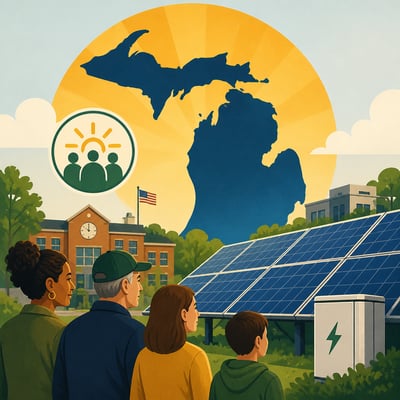
Michigan is expanding clean energy through state climate planning, public-private financing, community solar programs, school upgrades, and workforce-focused initiatives.
Local group buys and public projects are helping reduce upfront costs and improve energy resilience, while state efforts aim to mobilize larger investments in renewable power, efficiency, storage, and industrial decarbonization. The transition also raises practical challenges around funding, aging buildings, uneven access, and support for workers leaving fossil-fuel industries.
Michigan’s clean energy story is now framed more explicitly around implementation: local solar, school modernization, and climate finance are moving from planning toward concrete projects, while reduced federal support makes state and local financing more central.
Michigan’s clean-energy story has broadened from local solar-buying and school projects into a statewide transition framework centered on planning, climate finance, and workforce impacts. The new version adds explicit long-term emissions and jobs claims, making the effort look more like a coordinated state transition than a set of local pilots.