
 AI Governance
 Data Centers
 Drones
 Climate
 Privacy
 2026 Maine Senate
 Bob Dylan
Asia Scales Clean Energy Amid Constraints
Coverage from The Climate Group, Ember Energy, and others
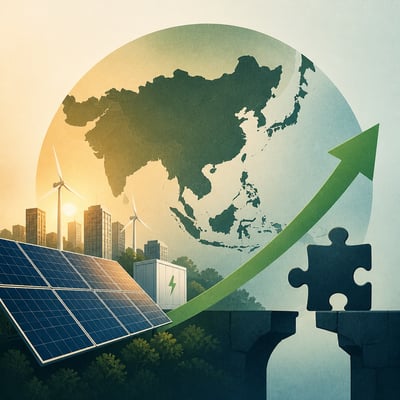
Asia is expanding solar, wind, battery storage, and other low-carbon energy technologies while rising electricity demand and fossil-fuel volatility increase pressure to strengthen power systems.
The transition is advancing through industrial scale, falling equipment costs, and cross-border cooperation, but transmission gaps, high financing costs, policy instability, and unequal market conditions continue to limit progress. Regional initiatives increasingly link clean energy with energy security, affordability, and resilience.
The story now places much greater emphasis on manufacturing scale and falling equipment costs as a driver of Asia’s clean-energy transition, especially in China. It also sharpens the financing problem by highlighting currency, sovereign-risk, and policy-change pressures in South and Southeast Asia, while elevating cross-border cooperation and regional grid initiatives.
The story shifts from a general clean-energy deployment narrative to a more explicit energy-security and infrastructure-investment frame. New emphasis is placed on transmission bottlenecks, cross-border power trading, and de-risking finance as the key enablers of regional buildout.