
 AI Governance
 Data Centers
 Drones
 Climate
 Privacy
 2026 Maine Senate
 Bob Dylan
Tonga Eruption Reveals Methane Breakdown
Coverage from The Debrief, Science News, and others
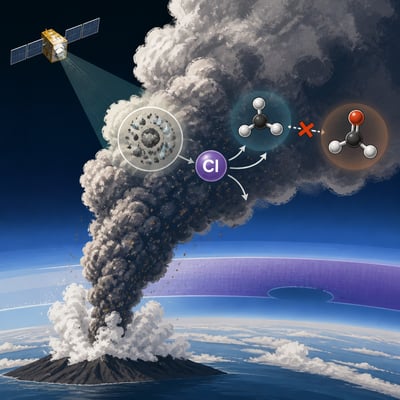
Satellite observations of the 2022 Hunga Tonga-Hunga Ha'apai eruption detected unusually high formaldehyde in its stratospheric plume, indicating that methane was being broken down for more than a week.
Researchers estimate that chlorine-driven reactions destroyed roughly 900 metric tons of methane per day, offering a rare way to observe methane loss from space and refine atmospheric methane estimates. The findings may inform research into methane removal, but they do not establish a safe or effective basis for deliberately reproducing the process, particularly because of possible ozone impacts.
The update adds a more specific quantification of the methane-destruction signal and strengthens the observational framing. It also sharpens the caution that deliberate replication remains speculative because of ozone and controllability concerns.