
 AI Governance
 Data Centers
 Drones
 Climate
 Privacy
 2026 Maine Senate
 Bob Dylan
Flow Batteries Expand Grid Storage Options
Coverage from The Business Standard, The Conversation, and others
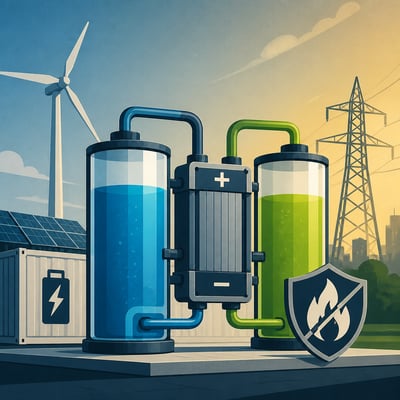
Flow batteries are advancing as an alternative to lithium-ion systems for storing intermittent wind and solar power at grid and facility scale.
Research and commercial partnerships are targeting lower-cost, longer-lived and less fire-prone chemistries, including all-iron and quinone electrolytes, while large deployments and laboratory results indicate progress. Commercial adoption still depends on validating performance outside the laboratory, improving testing consistency and resolving manufacturing and incentive requirements.
The story now adds stronger evidence of technical progress and a clearer commercial pathway for flow batteries, while introducing new constraints around incentives and cross-border ownership that could affect deployment. It also broadens from general research-and-deployment progress to specific project and policy frictions.