Last Update: 08/01/2026 at 1:00 PM EST

ISO New England’s Winter Peak Shift

Coverage from Utility Dive, Newsday, and others

Articles

6

Active Days

23

The Topic

ISO New England’s Winter Peak Shift topic image

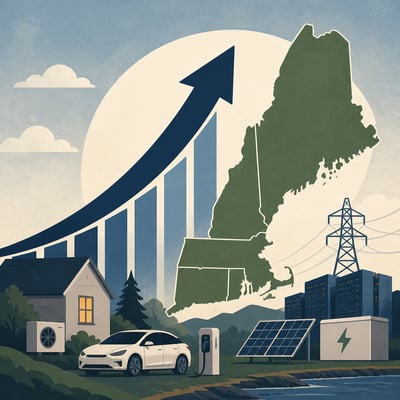
ISO New England expects electricity demand to rise as heat pumps and electric vehicles expand, although its 2026 forecast is more conservative than earlier projections after changes to federal incentives and adoption assumptions. The region is moving toward roughly equal summer and winter peaks by 2035, with winter demand increasingly shaped by electric heating, cold-weather conditions, and changing daily load patterns. Behind-the-meter solar and batteries will reduce some peak demand, but the forecast indicates that small batteries have limited winter value when peak timing is difficult to predict.

First Article: 05/04/26

Latest Article: 05/26/26

Summary

  • ISO New England projects electricity demand to rise about 9% by 2035, reversing a long period of mostly declining use.
  • Heat pumps and electric vehicles are the main sources of projected load growth, despite slower near-term adoption assumptions.
  • Winter and summer peaks are expected to become roughly equal by 2035, with winter peaks eventually becoming dominant.
  • Behind-the-meter solar lowers winter midday net load but has a smaller effect on the period’s actual peak.
  • Small customer-sited batteries are forecast to provide more reliable summer peak shaving than winter peak reduction because winter peak timing is uncertain.
  • Massachusetts is expected to account for much of the region’s incremental behind-the-meter storage, supported by state deployment goals.
  • Longer-range projections show sharper morning and evening winter ramps, creating potential battery opportunities alongside greater cold-weather grid stress.

History

07/22/2026

ISO New England's outlook has become more specific and somewhat more confident: demand is still rising, but the forecast now quantifies about 9% growth by 2035 and puts more emphasis on the timing challenge of roughly equal summer and winter peaks. The updated framing also gives batteries a clearer role in summer shaving while downplaying their winter usefulness.

06/29/2026

The story has shifted from a general upward-load forecast to a more specific downgrade in near-term growth expectations, driven by weaker heat pump and EV adoption after policy changes. It also adds clearer detail on winter-peak dynamics and the first modeled inclusion of small behind-the-meter batteries, though their impact remains limited.

Full History

Featured

Timeline: 23 Days

May 4May 8May 12May 18May 22May 26

Additional Articles

⭐⭐⭐⭐⭐

Modo Energy05-26-2026
ISO-NE's 2026 CELT report projects net load growth to 160 TWh by 2046 as heat pumps and EVs shift New England toward winter peaking and higher intraday volatility.

⭐⭐⭐

Newsday05-18-2026
ISO New England forecasts 9 percent electricity demand growth by the next decade in Maine and New England, driven by heat pumps and electric vehicles and modeled through CELT updates.
Nvdaily05-18-2026
ISO New England projects about 9 percent electricity demand growth through the next decade in Maine and New England as heat pumps and electric vehicles expand.