
 AI Governance
 Data Centers
 Drones
 Climate
 Privacy
 2026 Maine Senate
 Bob Dylan
Ships Add Onboard Carbon Capture
Coverage from gCaptain, ScienceDirect, and others
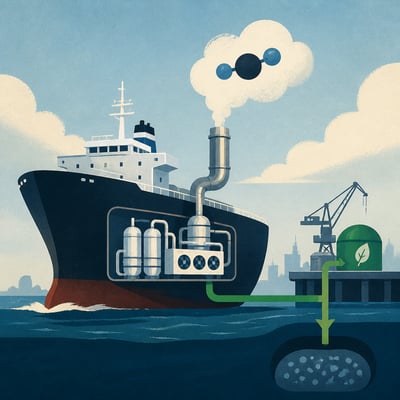
Onboard carbon capture and storage is being developed as a possible emissions-reduction option for ships that remain dependent on fossil or transition fuels.
Studies indicate that performance depends heavily on vessel design, engine conditions, capture technology, methane emissions, available space, and arrangements for storing and offloading captured CO2. DNV has introduced a common verification framework, but wider adoption still depends on vessel integration, carbon-reception infrastructure, and regulatory recognition.
The story has shifted away from regulatory pathway-building toward a more operationally grounded assessment of where onboard carbon capture works best and why. The new version adds clearer vessel-segment prioritization and specific technical factors that determine whether the technology is practical.
The story has shifted from technical feasibility to regulatory pathway-building, with EU and IMO signals now making onboard carbon capture look more deployable for compliance use on fossil- and transitional-fuel ships. Standardization is also becoming more concrete around DNV's verification framework, while port access, storage, and traceability remain the main blockers.