
 AI Governance
 Data Centers
 Drones
 Climate
 Privacy
 2026 Maine Senate
 Bob Dylan
Ann Arbor’s City-Owned Energy Pilot
Coverage from The Detroit News, Great Lakes Now, and others
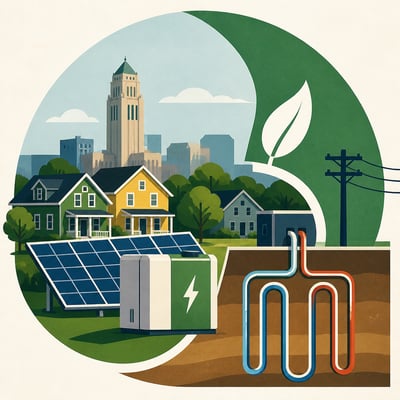
Ann Arbor is developing a voluntary Sustainable Energy Utility in the Bryant neighborhood, allowing the city to own and manage clean-energy equipment while residents remain connected to DTE Energy’s grid.
The pilot is expected to combine solar, batteries, energy-efficiency upgrades, and a neighborhood-scale geothermal system serving roughly 260 homes and community facilities. The approach is intended to lower energy costs, reduce emissions, improve reliability, and extend clean-energy access to renters and energy-burdened households, though high upfront costs, older-building upgrades, installation capacity, and uncertain demand remain challenges.
The story now emphasizes that the SEU is moving into implementation with federal funding and a clearer delivery model, rather than remaining mainly a proposed pilot. It also adds new detail on how the program will be financed and operated, including separate bills for SEU and grid service.
The story is now more concrete about execution: Ann Arbor’s SEU has become a voluntary, voter-approved pilot with a defined Bryant customer base and a clearer service package. The latest version also sharpens the risks, emphasizing retrofit, cost, installer, and scale constraints rather than mainly the city’s model-building ambitions.