
 AI Governance
 Data Centers
 Drones
 Climate
 Privacy
 2026 Maine Senate
 Bob Dylan
IMO Shipping Net-Zero Plan Faces Delay
Coverage from AP News, Grist, and others
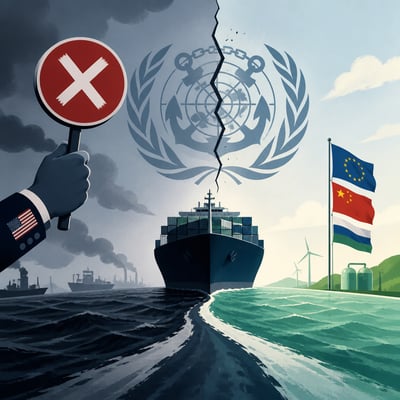
The International Maritime Organization is keeping its proposed Net-Zero Framework for global shipping alive while extending negotiations into the fall.
The plan combines progressively tighter marine-fuel emissions standards with fees on emissions above a threshold, using the proceeds to support cleaner fuels, technologies, and developing countries. U.S. opposition, support from some fossil-fuel-aligned states, and alternative proposals could still weaken or block the framework, leaving the shipping industry without a single global standard.
The main change is procedural: IMO members have extended negotiations into the fall instead of reaching a decision, keeping the Net-Zero Framework alive but unresolved. The update also sharpens the details of the proposal and the pressure campaign against it, including explicit U.S. threats and ongoing alternative plans.
The story is reframed from a dispute over a net-zero carbon levy to a broader choice between carbon pricing and softer regulatory alternatives, with cost concerns now more explicitly shaping the outcome. The negotiation also looks more politically fraught, as retaliation and trade-pressure threats are now part of the talks.