
 AI Governance
 Data Centers
 Drones
 Climate
 Privacy
 2026 Maine Senate
 Bob Dylan
Türkiye’s Storage Push Meets Coal Dependence
Coverage from Hürriyet Daily News, Cyprus Mail, and others
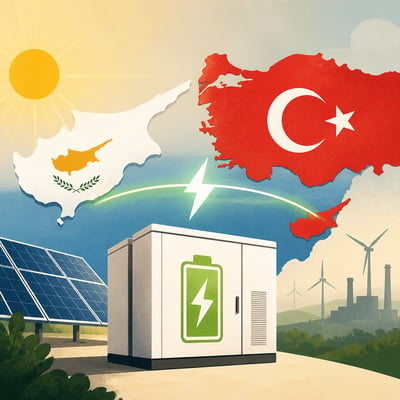
Türkiye is using a policy that links new wind and solar projects with battery capacity to build one of Europe’s largest planned storage pipelines, while also targeting major growth in renewable generation and grid investment.
The approach could improve flexibility as electricity demand rises, but coal still supplies a substantial share of Türkiye’s power and implementation depends on transmission, permitting, market reform, and financing. Related developments in Cyprus and across Europe show that storage is increasingly needed to shift surplus renewable electricity into periods of higher demand, although regulatory and cost barriers remain.
If you read one thing
It provides the clearest overall introduction to Türkiye’s storage-led renewable expansion, including the tension with coal dependence and grid constraints.
Best explainer
The IEA perspective explains why transmission, flexibility, storage, and faster implementation are essential to Türkiye’s renewable targets.
Latest development
This recent story-driver shows the practical consequences of inadequate flexibility through Cyprus’s severe solar curtailment and growing storage response.
The evidence
It supplies validated figures on Türkiye’s 2035 renewable, grid, flexibility, and investment ambitions, grounding the broader transition story in measurable targets.
Storage is becoming essential renewable-system flexibility
Battery and longer-duration storage are increasingly needed to shift midday renewable surpluses into evening demand, reduce curtailment, and limit fossil backup. Cyprus’s severe solar losses and wider European investment illustrate the system value of storage.
Grid constraints are limiting renewable and storage delivery
Interconnection queues, constrained distribution networks, and isolated-system limitations remain major barriers to converting renewable and storage plans into usable capacity. Cyprus is curtailing a large share of potential solar output, while European queues and transmission needs constrain deployment.
Türkiye has an outsized storage pipeline but an unresolved execution gap
Türkiye’s storage-linked renewable-access policy has created a large planned battery pipeline alongside a target of 120 GW of wind and solar by 2035. Delivery depends on substantial grid and flexibility investment, financing, permitting, policy implementation, and managing continued coal reliance.
EV-policy uncertainty threatens electrification investment
Potential weakening of UK and European zero-emission vehicle targets is framed as a risk to charging infrastructure, EV deployment, and vehicle-to-grid flexibility that could support renewable integration. The evidence indicates policy and investment uncertainty rather than a confirmed reversal.
0.2 per cent percent
share of PV applications including batteries
“Data supplied by the EAC show that applications for PV systems fell from 38,856 in 2025 to 1,835 during the first part of 2026, reflecting the end of net metering and the former Photovoltaics for All subsidy scheme. Applications for systems including batteries increased from 89, or 0.2 per cent of applications, in 2025 to 137, or 7.4 per cent of the much smaller total, in 2026.”
1,835 applications
applications for photovoltaic systems
“Data supplied by the EAC show that applications for PV systems fell from 38,856 in 2025 to 1,835 during the first part of 2026, reflecting the end of net metering and the former Photovoltaics for All subsidy scheme. Applications for systems including batteries increased from 89, or 0.2 per cent of applications, in 2025 to 137, or 7.4 per cent of the much smaller total, in 2026.”
43% share of electricity generation
renewables’ share of generation
“Electricity demand increased by almost 5% a year on average between 2005 and 2024, the fastest rate among IEA member countries, and is expected to continue rising through 2035. Renewables supplied 43% of Türkiye’s electricity generation in 2025, while the National Energy Plan projects a 55% share by 2035. Solar capacity is expected to nearly quadruple between 2024 and 2035, and wind capacity is expected to triple. Nuclear power is also expected to join the electricity mix.”
almost 5% a year annual percentage
average electricity-demand growth
“Electricity demand increased by almost 5% a year on average between 2005 and 2024, the fastest rate among IEA member countries, and is expected to continue rising through 2035. Renewables supplied 43% of Türkiye’s electricity generation in 2025, while the National Energy Plan projects a 55% share by 2035. Solar capacity is expected to nearly quadruple between 2024 and 2035, and wind capacity is expected to triple. Nuclear power is also expected to join the electricity mix.”
162 gigawatt-hours
solar electricity curtailed
“According to CyprusGrid data, 162 gigawatt-hours were curtailed in the first five months of 2026, equivalent to 65 per cent of the electricity that could have been generated during that period.”
Cyprus shifts solar integration toward centralized storage after net billing weakens household economics
Cyprus’s move from net metering to net billing has sharply reduced the value of exporting household solar power, while the government is advancing centralized storage projects to address severe curtailment. Household battery uptake has risen modestly, but cost and seasonal-demand constraints limit residential self-sufficiency.
Previously
Türkiye has approved more than 33 GW of battery projects since 2022 after linking renewable grid access to storage, creating a pipeline larger than that of any single EU country. The policy is intended to pair batteries with expanding wind and solar capacity, but project approvals do not yet guarantee construction, and transmission constraints, permitting delays, market exposure, and continued coal reliance remain significant obstacles. Across Europe and in isolated Cyprus, storage is increasingly being used to address midday renewable surpluses and evening power shortfalls.
The story is largely unchanged, but its framing now emphasizes grid investment and implementation as central to whether storage enables renewable growth and reduces fossil-fuel dependence.
The story now emphasizes the unprecedented scale of Türkiye’s approved storage pipeline while stressing that approvals may not translate into construction. It also broadens beyond Europe’s main markets through Cyprus’s curtailment problem and adds a separate UK regulatory risk affecting charging investment.