
 AI Governance
 Data Centers
 Drones
 Climate
 Privacy
 2026 Maine Senate
 Bob Dylan
Last Update: 09/29/2026 at 3:33 PM EST
Aqueous Carbon Capture Materials
Coverage from ACS Publications, JACS Au, and others
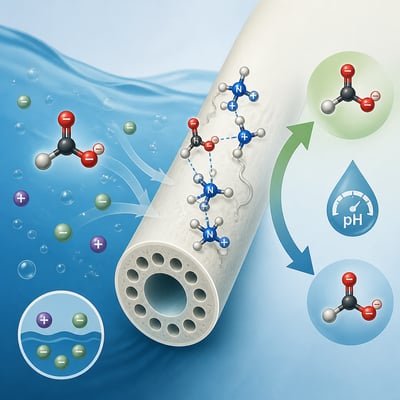
Recent work shows a consistent push to capture dissolved inorganic carbon from water using guanidinium-functionalized PVDF hollow fibers.
The main pattern is improved bicarbonate binding, mild pH-swing regeneration, repeat-cycle stability, and some tolerance to saline conditions, all at bench scale.
Looking Back
History
05/30/2026
The story is largely unchanged, but the framing has been tightened around bicarbonate capture from water and the operational details of mild acid/pH-swing regeneration. The current version also gives slightly clearer limits on saline performance, noting reduced capture as chloride rises.
All Articles4 articles
Additional
3/29/2026 • Clean Energy & Emissions • General
3/29/2026 • Clean Energy & Emissions • General
3/29/2026 • Clean Energy & Emissions • General
3/29/2026 • Clean Energy & Emissions • General