
 AI Governance
 Data Centers
 Drones
 Climate
 Privacy
 2026 Maine Senate
 Bob Dylan
Virginia Balances Data Centers And Clean Energy
Coverage from WHRO, Virginia Conservation Network, and others
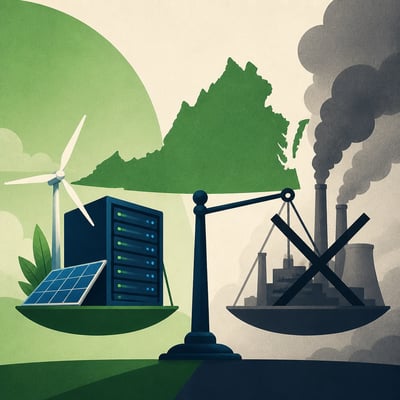
Virginia lawmakers and regulators are reshaping clean-energy policy as rapid data center growth increases electricity demand and intensifies debate over gas generation, grid costs, and ratepayer impacts.
The 2026 legislative agenda advances solar, battery storage, energy efficiency, community solar, demand flexibility, and a possible return to the Regional Greenhouse Gas Initiative, while a proposed data center tax-break condition would tie public incentives to cleaner power and greater efficiency. The central tension is whether clean-energy additions and demand-management measures can expand quickly enough to limit new fossil-fuel generation and keep electricity affordable.
The story now emphasizes that Virginia’s clean-energy debate is moving from general policy planning to concrete leverage over data center growth, with proposed tax-exemption conditions and 2026 legislative action tying incentives more directly to cleaner power and efficiency. It also sharpens the policy frame around how quickly clean resources can scale to avoid more fossil-fuel generation and rising grid costs.
The story now has more concrete policy detail: Virginia’s clean-energy debate has moved from general planning tensions to specific 2026 legislative and regulatory proposals, including data-center clean-power conditions and shared-solar billing changes. It also newly highlights the approved Dominion gas peaker as a central counterweight to the clean-energy agenda.