
 AI Governance
 Data Centers
 Drones
 Climate
 Privacy
 2026 Maine Senate
 Bob Dylan
Colombia Pushes Fossil Fuel Phaseout
Coverage from NPR, Council on Foreign Relations, and others
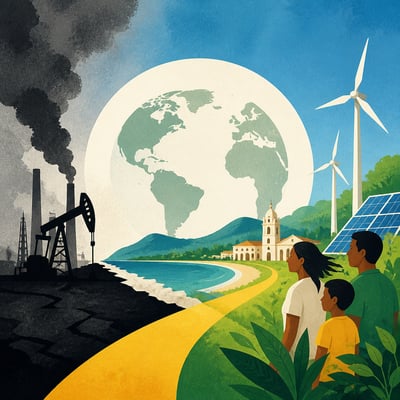
Colombia and the Netherlands have launched a coalition-based process to help governments plan a transition away from fossil fuels, following stalled progress in formal climate negotiations.
The Santa Marta conference produced commitments to develop national roadmaps, launched a scientific advisory panel, and focused on financing, energy security, fossil fuel subsidies, and the political barriers facing producer countries. Early country experience, particularly in Colombia and Brazil, shows that expanding renewables is more achievable than permanently reducing fossil fuel production and revenue dependence.
The story now emphasizes that the Santa Marta process has moved from a broad political gathering to a more structured coalition effort, with a new scientific advisory panel and clearer policy focus. It also adds a sharper assessment that the hardest barrier is not renewable expansion but politically and financially unwinding fossil-fuel dependence, especially in producer countries.
The story has broadened from a smaller Colombia-Netherlands-led coalition into a much larger, more structured effort involving more than 50 governments, the EU, and scientific advisers. It also now emphasizes concrete domestic roadmaps, implementation hurdles, and the inclusion of export-fuel emissions and Brazil's parallel planning.