Last Update: 08/01/2026 at 1:00 PM EST

Europe Energy Security and Renewables

Coverage from Reuters, The New York Times, and others

Articles

32

Active Days

95

The Topic

Europe Energy Security and Renewables topic image

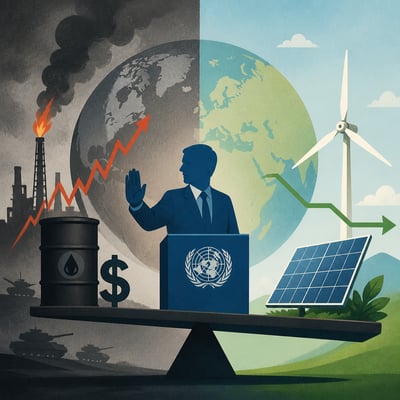
Recent material consistently links Europe’s fossil-fuel dependence to price volatility and energy-security risk, while presenting wind, solar, storage, and grid upgrades as the main response. Spain is the clearest example, with lower gas dependence and falling household bills used to support the case for deeper electrification and faster clean-power buildout. The topic is coherent and fairly dense, with a strong current-policy and market signal and limited fragmentation.

First Article: 03/16/26

Latest Article: 06/18/26

Summary

  • The dominant pattern is a policy and market argument that imported oil and gas expose Europe to geopolitical shocks and volatile prices.
  • Wind and solar are repeatedly presented as reducing wholesale power prices, import bills, and dependence on gas-set electricity pricing.
  • Spain is the strongest recurring case study: higher renewable output, lower gas influence, and falling household bills are used as evidence for the transition argument.
  • Grid flexibility, storage, transmission, and curtailment management emerge as the main implementation constraints as renewable shares rise.
  • Several pieces emphasize that lower fossil-fuel exposure can improve both energy security and public-finance outcomes through reduced import spending.
  • Modeling and analysis reinforce the policy case for faster net-zero timing, but the evidence is still concentrated in Europe and in power-sector economics.
  • Retail electricity prices are more fragmented than wholesale prices, because taxes, levies, and network costs often blunt the effect of cheaper generation.

History

06/17/2026

The story has narrowed and strengthened around Spain as the clearest proof point, with renewable output and lower gas dependence now used to argue more concretely for deeper electrification and faster clean-power buildout. The broader European framing is still intact, but the current version puts more weight on implementation constraints and the household-bill impact of the transition.

06/11/2026

The story now places more emphasis on fossil-fuel import dependence as a structural vulnerability and adds fresh support that renewables have already generated sizable import-cost savings. It also sharpens the policy debate by showing disagreement over how to balance climate targets against near-term energy costs.

Full History

Featured

Timeline: 95 Days

Mar 16Apr 6Apr 20May 11May 25Jun 15

Additional Articles

⭐⭐⭐⭐⭐

EurekAlert!06-01-2026
Max Planck Institute for Chemistry researchers model EU fuel-price shocks and find that earlier net-zero via large-scale renewable expansion can yield net benefits after accounting for energy and health co-benefits.
CleanTechnica / Zachary Shahan06-18-2026
Ember analysis in 2026 links Spain's wind and solar growth to lower household electricity costs as gas became less influential in power pricing.
Euronews05-30-2026
Ember and IEA-linked analysis in 2025 and early 2026 reports renewable wind and solar growth cutting EU fossil import spending during geopolitical price shocks.
Earth.Org / Manleen Dugal04-21-2026
Europe links an Iran-triggered oil and fuel price shock to REPowerEU progress and a new clean-energy investment strategy to accelerate electrification, storage, and geothermal through 2030.
Bright Spots / Jan Rosenow05-17-2026
European and US electricity price analysis finds renewables correlate with lower wholesale prices, while retail bills depend more on non-wholesale costs and gas-setter hours.

⭐⭐⭐

PV Tech / JP Casey06-16-2026
Ember reports Spain renewable buildout from 2021 to 2026 has reduced gas-driven electricity price volatility and household bills, with storage and grid upgrades needed.
Euronews / Ruth Wright06-16-2026
Ember reports Spain lowered household electricity bills since March 2026 as wind and solar reduced gas influence on power pricing.
Reuters03-27-2026
European Union policymakers and the European Investment Bank in the 2020s are using grid and clean-energy financing initiatives to speed renewable deployment amid permitting delays and higher capital costs.
Baird Maritime06-16-2026
Confindustria president Emanuele Orsini urged Giorgia Meloni in Italy to create a special commissioner to accelerate renewable permitting in response to high power costs.
EME Outlook Magazine / Neil Perry05-18-2026
Energy Transitions Commission report argues renewables and electrification after the Hormuz Strait disruption can reduce oil and gas exposure to future shocks.
CleanTechnica / Zachary Shahan05-30-2026
Stanford professor Mark Z. Jacobson reported that CAISO wholesale electricity prices were lowest in the U.S. for 2025-26 as wind, water, and solar met demand for many 2026 days.
ESG News05-01-2026
Geopolitical oil and gas disruptions are driving higher energy costs during the 2020s, with clean energy investment promoted as a path to cost stability and resilience.
Euronews.com / Angela Symons03-16-2026
UNFCCC secretary and European ministers highlight renewables as a shield against fossil fuel dependence at a Brussels summit on March 16.
Anthropocene Magazine06-09-2026
Meng W. and colleagues used EU energy-system models in 2026 to assess how Russia-Ukraine energy shocks affect decarbonization economics and cost-effectiveness of faster renewables.
PubAffairs Bruxelles / Szymon Kardaś05-29-2026
ECFR analysis assesses how EU and member states expanded energy diplomacy from 2022 to 2026 to diversify fossil gas supplies and pursue hydrogen and critical raw materials agreements.
Renewable Energy Institute / Lucie Norel-Wilson06-17-2026
Ember reported that Spain renewables growth lowered household electricity bills in March to April 2026 using 2025 generation shares and price-stability comparisons amid geopolitical shocks.
UN Climate Change / Simon Stiell04-10-2026
UN climate leadership ties Middle East conflict-driven fossil fuel price shocks to inflation and hunger, and points to COP30 grid and storage commitments to accelerate clean energy.
UN Climate Change04-20-2026
Simon Stiell told GX Week in Yeosu that Middle East-driven fossil fuel cost volatility shows why South Korea should accelerate solar and wind while funding flood, storm, and extreme-heat resilience.
Energy04-20-2026
EU energy security planning in 2024 and 2025 highlights fossil import vulnerabilities from disruptions like the Strait of Hormuz while adding climate and cyber infrastructure risks.
The Missoulian / Elizabeth Shackelford03-23-2026
In 1979, President Jimmy Carter advanced White House solar and a U.S. solar strategy, linking renewables to energy security after oil shocks driven by geopolitical disruptions.
Enrique Dans / Enrique Dans03-23-2026
Cuba experiences major blackouts as oil deliveries decline, while rapidly installed solar parks raise electricity generation and reduce exposure to fossil fuel supply disruptions.
Storebrand Asset Management / Philip Ripman03-24-2026
Storebrand Renewable Energy is described as an investment vehicle for renewable grid, storage, and generation trends driven by energy security and electrification.
One Green Planet / Nicholas Vincent03-21-2026
EU leaders after Iran-related strikes urged faster wind and solar deployment to reduce imported oil and gas costs and improve energy security.
SEB05-12-2026
SEB released the Sustainable Finance Outlook in 2026, citing Middle East conflict and carbon costs as drivers of faster clean-energy and sustainable aviation fuel transitions in Europe.
European Council on Foreign Relations05-28-2026
EU energy diplomacy since 2022 diversified fossil fuel supplies and expanded LNG and interconnectors, but proposed coordination and binding commitments remain limited as of 2026 planning.

⭐️⭐️

Climate Home News / Matteo Civillini03-16-2026
In Brussels on a policy briefing, Simon Stiell warns that fossil fuel dependence risks security and price shocks, urging renewables expansion.
Fine Day Radio 102.3 WNJD03-16-2026
UNFCCC head in Brussels cites Europe energy price surge and fossil fuel dependence, urging transition to renewables and nuclear.
OilPrice.com / Tsvetana03-16-2026
UNFCCC official Simon Stiell argues renewables reduce fossil fuel dependence at the 2026 Green Growth Summit in Brussels.
OtherWords / Sonali Kolhatkar03-31-2026
A climate and energy security analysis links oil supply disruptions to fossil fuel dependence and argues renewable electricity deployment can reduce both geopolitical disruption and climate-driven extreme weather risk.