
 AI Governance
 Data Centers
 Drones
 Climate
 Privacy
 2026 Maine Senate
 Bob Dylan
U.S. Clean Energy Manufacturing Rollbacks
Coverage from Council on Foreign Relations, E2, and others
U.
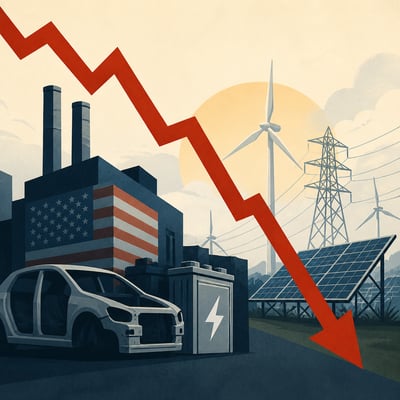
S. clean energy manufacturing and project pipelines are showing stress after federal rollbacks, with repeated reports of cancellations, job losses, and investment withdrawals across EVs, batteries, solar, wind, and storage. The strongest signal is not total collapse but uneven growth: some utility-scale and grid-linked investment continues while manufacturing, especially EV- and battery-linked capacity, weakens sharply. Multiple sources also frame the shift as a policy-driven break from the 2021-2024 expansion period, with uncertainty around tax credits, sourcing rules, tariffs, and permitting now shaping decisions.
The story has become more specific and more severe: it now quantifies broad job and investment losses, not just isolated cancellations, and ties them to a wider set of policy pressures. It also reframes the slowdown as a policy-driven break from the 2021-2024 expansion cycle rather than a narrow EV-and-battery issue.
The story has broadened from a general clean-energy manufacturing slowdown to a more specific policy-driven disruption centered on EV and battery supply chains, while also highlighting that utility-scale generation and storage remain active. The added reporting sharpens the causal frame by emphasizing tax-credit eligibility rules and domestic-content requirements as ongoing headwinds.