
 AI Governance
 Data Centers
 Drones
 Climate
 Privacy
 2026 Maine Senate
 Bob Dylan
Last Update: 09/29/2026 at 3:33 PM EST
Morocco's Renewable Buildout and Hydrogen Push
Coverage from OilPrice.com, OkDiario, and others
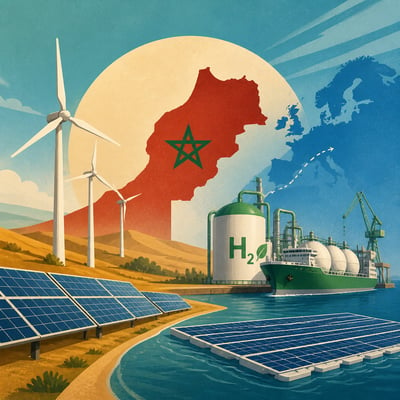
Morocco is expanding renewable power, tightening rules for self-consumption, and financing storage and hydrogen projects to support a larger clean-electricity system.
The strongest signal is a coordinated buildout of solar, wind, pumped storage, and export-oriented hydrogen infrastructure, with grid constraints still shaping what can scale.
Looking Back
138 Day Timeline
Mar 9
Apr 2
Apr 23
May 17
Jun 7
Jul 1
Jul 22
History
07/20/2026
The story has shifted from a broad renewable-and-hydrogen buildout to a more execution-focused narrative centered on grid flexibility and financing. Pumped storage, solar-plus-storage, and external lenders now appear as the key enablers of scale, while export hydrogen remains part of the same strategy.
All Articles9 articles
Additional
5/30/2026 • Clean Energy & Emissions • General
7/24/2026 • Clean Energy & Emissions • General
5/26/2026 • Clean Energy & Emissions • General
5/14/2026 • Clean Energy & Emissions • General
5/11/2026 • Clean Energy & Emissions • General
3/9/2026 • Clean Energy & Emissions • General
7/1/2026 • Clean Energy & Emissions • General
7/2/2026 • Clean Energy & Emissions • General
7/9/2026 • Clean Energy & Emissions • General