
 AI Governance
 Data Centers
 Drones
 Climate
 Privacy
 2026 Maine Senate
 Bob Dylan
South Korea Accelerates Renewable Energy
Coverage from Yahoo, TaiyangNews, and others
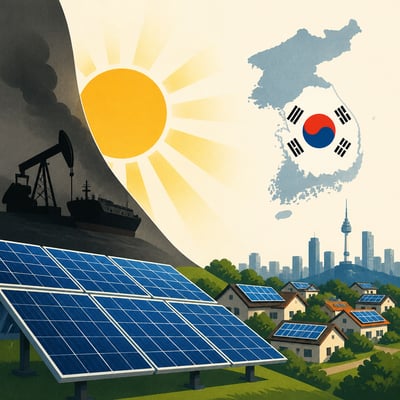
South Korea is accelerating solar and broader renewable-energy development as fuel-import exposure and Middle East disruption increase pressure to reduce dependence on oil and gas.
Government funding, village solar programs, and private investment are expanding, while grid bottlenecks, reliance on imported panels, electricity-pricing constraints, and continued coal and nuclear measures complicate the transition. The central question is whether the current push produces lasting system changes or mainly short-term energy-security responses.
The story is reframed more explicitly as an energy-security response to Middle East disruption, with renewed emphasis on short-term stability rather than just long-term decarbonization. The current version also sharpens the scale of the renewable push and adds more detail on policy and market constraints.
The story now extends beyond government-led renewable expansion to include major private-sector buildout for AI and semiconductor electricity demand, making industrial power needs a bigger driver of the transition. It also adds sharper evidence that execution is constrained by transmission delays, local resistance, and continued fossil and nuclear stopgaps.