
 AI Governance
 Data Centers
 Drones
 Climate
 Privacy
 2026 Maine Senate
 Bob Dylan
Last Update: 09/29/2026 at 3:33 PM EST
Rising Gas Costs And Electrification
Coverage from CleanTechnica, IEEFA, and others
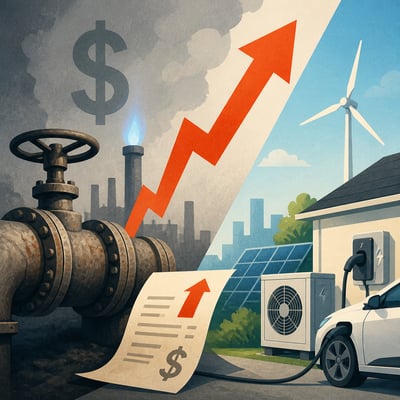
US energy prices and utility bills are rising as gas infrastructure spending, fuel volatility, and new load growth push costs higher.
Across gas utilities, power planning, and household energy use, electrification is reshaping demand while exposing ratepayers to stranded assets, long lead times, and fragmented cost recovery.
Looking Back
107 Day Timeline
Apr 7
Apr 25
May 13
May 31
Jun 15
Jul 3
Jul 21
History
07/23/2026
The story broadens from gas-bill pressure and electrification impacts into a more explicit account of how new load growth, especially data centers and electrified demand, is complicating power planning and raising hidden infrastructure costs. It also strengthens the framing that regulatory and cost-recovery fragmentation is now a central part of the problem.
All Articles7 articles
Additional
4/11/2026 • Clean Energy & Emissions • General
4/8/2026 • Economy, Business & Innovation • General
7/2/2026 • Clean Energy & Emissions • General
7/22/2026 • Clean Energy & Emissions • General
6/29/2026 • Clean Energy & Emissions • General
4/7/2026 • Clean Energy & Emissions • General
5/8/2026 • Clean Energy & Emissions • General