
 AI Governance
 Data Centers
 Drones
 Climate
 Privacy
 2026 Maine Senate
 Bob Dylan
Cement Carbon Capture Advances
Coverage from ESG News, Carbon Herald, and others
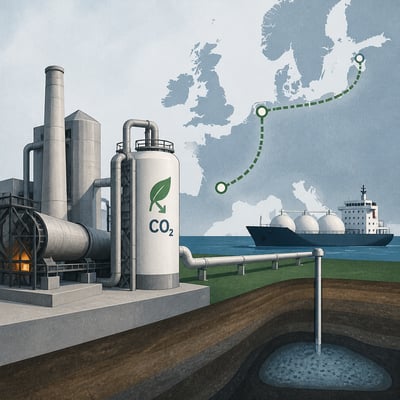
Cement producers, technology firms, and governments are advancing carbon capture through pilots, research facilities, partnerships, and large public support packages.
Projects in Denmark, France, Germany, and India are testing different approaches to capture process emissions that cannot be eliminated through cleaner energy alone. The activity indicates growing technical and policy momentum, but full-scale rollout remains dependent on performance, financing, transport and storage arrangements, and supportive policy conditions.
The story has moved from a broad account of pilot and partnership activity to clearer evidence of commercialization, with Denmark's Aalborg Portland project now framed as a funded contract starting in 2030. The current version also adds more concrete scale and performance details from the German and French pilots, strengthening the sense that cement carbon capture is entering execution rather than just experimentation.
The story broadens from a mostly European cement-CCS rollout to a wider industrial carbon-capture push that now includes India, sector coordination, and more varied capture methods. It also adds concrete execution milestones, especially Denmark-backed financing for Aalborg Portland and new pilot and demonstration activity in France, Germany, and Gujarat.