
 Climate
 Privacy
 Bob Dylan
 Drones
 Data Centers
 AI Governance
 2026 Maine Senate Race
Trump Pledge Targets Data Center Power Costs
Coverage from The New York Times, Utility Dive, and others
Articles
110
Active Days
75
The Topic
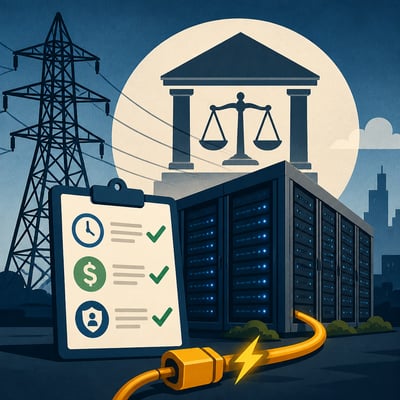
The Trump administration has expanded a voluntary pledge asking technology companies, data center developers, utilities, and participating governors to prevent households from absorbing the costs of new generation, transmission, and delivery upgrades for large computing facilities. At the same time, FERC is examining whether PJM and other grid operators’ interconnection rules shift network costs to existing customers and has directed NERC to develop reliability standards for some large computational loads. The practical effect will depend on state tariffs, utility agreements, regional grid rules, and whether voluntary commitments become enforceable requirements.
First Article: 05/12/26
Latest Article: 07/25/26
Summary
- Trump’s Ratepayer Protection Pledge asks major technology companies and data center operators to fund generation, transmission, and delivery upgrades tied to their facilities.
- The pledge has attracted major technology companies, utilities, data center developers, and 23 Republican governors, but it is non-binding and its implementation depends on state and utility action.
- Ratepayer advocates argue that PJM’s existing rules can still shift data center-related transmission costs onto households and other customers.
- FERC has ordered PJM and other grid operators to respond to concerns that large-load interconnection rules may be unjust and unreasonable.
- FERC has also directed NERC to develop reliability standards and registration criteria for certain large computational loads, potentially creating new compliance duties for some facilities.
- New York’s temporary pause on the largest data centers and proposals for broader moratoria show that electricity, water, emissions, and local infrastructure impacts are intensifying opposition.
- The central unresolved issue is whether data center growth will pay its full marginal cost without increasing bills or reliability risks for existing customers.
History
The story now emphasizes a broader federal and state push to make data centers pay full grid costs, with FERC taking a more direct regulatory posture toward PJM’s rules. It also adds that the pledge has been expanded to include utilities and participating governors, but remains non-binding.
The story now centers more explicitly on active federal implementation: FERC is not just scrutinizing data-center cost allocation, but also directing NERC to draft possible reliability standards for large computational loads. The current version also broadens the practical policy question to include enforceable tariffs and project-specific arrangements that could determine whether households actually avoid cost shifts.
Featured
Timeline: 75 Days
Hover over any logo to see coverage summary, click for full article.