
 Climate
 Privacy
 Bob Dylan
 Drones
 Data Centers
 AI Governance
 2026 Maine Senate Race
AI Data Centers Push the Grid Toward Its Limits
Coverage from Fortune, Datacenter Dynamics, and others
Articles
8
Active Days
68
The Topic
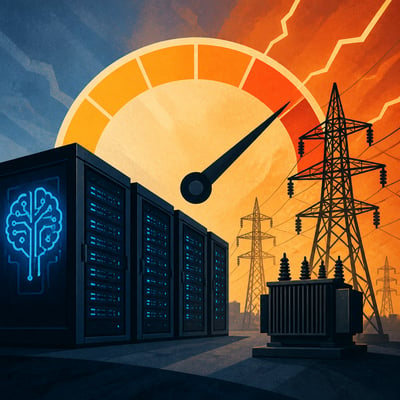
AI data centers are increasing electricity demand while introducing unusually rapid power swings from dense, synchronized GPU workloads. Utilities, operators, and equipment suppliers are responding with new generation and grid arrangements, intelligent UPS systems, higher-voltage distribution, liquid cooling, and expanded electrical manufacturing capacity. The resulting pressure is extending interconnection timelines, raising questions about who pays for grid upgrades, and intensifying disputes over reliability and ratepayer impacts.
First Article: 05/19/26
Latest Article: 07/25/26
Summary
- AI workloads can create rapid, synchronized power swings that stress generators, transformers, UPS systems, and upstream grid equipment.
- AI racks are already reported at roughly 150 kilowatts, compared with about 25–40 kilowatts for conventional server racks.
- Power availability is emerging as a leading constraint on new data-center projects, with higher peak loads contributing to longer interconnection timelines.
- Utilities and hyperscalers are pursuing tighter control of electricity supply through long-term contracts, generation ownership, and broader utility consolidation.
- Operators are testing fault ride-through UPS systems, higher-voltage DC distribution, liquid cooling, and workload controls to reduce losses and manage volatility.
- The allocation of scarce power is creating regulatory and community tension, including disputes over supply for Lake Tahoe customers and proposals requiring data centers to cover grid-upgrade costs.
- Electrical suppliers are expanding capacity as AI-related demand increases orders for cable, switchgear, power-conversion equipment, and cooling systems.
History
This topic is new, but as new articles are added to it this area will summarize shifts, changes and expansions of the issues.
Featured
Timeline: 68 Days
Hover over any logo to see coverage summary, click for full article.