

Last Update: 06/03/2026 at 4:01 AM EST
Arkansas Data Center Permitting Fight
Coverage from Washington Post, KATV, and others
Articles
15
Latest Article
06/01
Active Days
23
Executive Summary
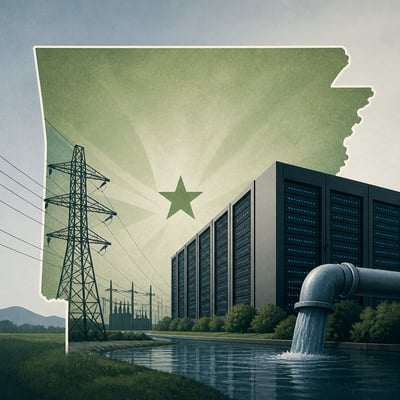
Large data center projects are moving through permitting, zoning, and utility review as local leaders try to balance investment claims against rising concerns over water use, power demand, noise, wetlands, and public transparency. Little Rock’s proposed rules and the Springdale project’s next approvals are the clearest current flashpoints.
Key Points
- Little Rock is advancing tiered data center rules that would tightly regulate cooling, setbacks, wastewater discharge, and noise for future permits.
- The proposed Google-linked Port of Little Rock campus is the main trigger for Arkansas regulatory debate, with officials citing large water and power needs and wetland impacts.
- Community and oversight pressure is pushing for stronger local controls, more disclosure, and possible limits on on-site fossil-fuel backup generation.
- Springdale’s hyperscale project has moved past conditional-use approval but still needs land development filings and state and county permits, keeping opposition active.
- Across the Arkansas projects, supporters emphasize jobs, tax revenue, and infrastructure investment, while opponents focus on utilities, land use, and public trust.
- Utility planning is part of the core story: Entergy, Central Arkansas Water, and the Little Rock Port Authority are all tied to cost allocation and capacity questions.
- The topic also includes a wider Arkansas buildout story, with West Memphis, Conway, Clarksville, and other sites showing continued hyperscale interest.
Featured Article
Little Rock proposed data center permit regulations on May 19, applying to future city-permitted projects near the Port while imposing water and noise limits.
Coverage Timeline: 23 Days
Hover over any logo to see coverage summary, click for full article.
Additional Articles
⭐⭐⭐⭐⭐
Little Rock Regional Chamber officials and utilities held a press conference to address community concerns about Google and AVAIO data center power, water, noise, and air impacts in Arkansas.
Google plans a West Memphis, Arkansas data center campus while Entergy Arkansas supports power and Arkansas tax-break rules broaden eligibility for fiber-connected data center sites.
Google will invest in a West Memphis, Arkansas data center campus, partnering with Entergy Arkansas on power while the state processes other large buildouts and permitting filings.
Little Rock's Sustainability Commission pressed for stronger data center regulation before a board vote, citing power and water impacts for Google's Port of Little Rock campus.
Little Rock Mayor Frank Scott Jr. proposed tiered data center regulations, with votes scheduled for June 2, covering zoning setbacks, water restrictions, and noise controls.
Little Rock Board of Directors considers a data center ordinance Tuesday as Capi Peck and Kathy Webb push for a temporary construction moratorium.
Little Rock submitted proposed data center regulations tied to permit applications, defining hyperscale requirements for cooling and noise ahead of a June 2 board vote.
⭐⭐⭐
In Pulaski County, Arkansas, residents and local officials pushed for moratoriums and regulation of planned Google and AVAIO Digital data centers amid concerns about water and utility impacts.
Pulaski County, Arkansas, held a meeting in which supporters and opponents of Google and AVAIO Digital data centers disputed water use and public review before sending regulations to planning.
Springdale residents opposing Allegheny DC Property’s proposed data center at the former Cheswick Generating Station plan to use Allegheny County permit reviews and hearings after December borough approval.
Little Rock Sustainability Commission urged a pause and stronger standards as the Board votes on data center rules covering noise, water, wastewater, and setbacks.
Springdale Borough will hold a June 10 open house for a proposed hyperscale data center after December conditional-use approval.
Little Rock Port Authority discusses a proposed Google data center on a Port site in Arkansas, including Fair Share Plus utility terms and wetlands mitigation plans.
July 6, 1959 context: Little Rock Port Authority argues a Google data center proposal can expand jobs, property tax revenue, and wetlands mitigation in Little Rock, Arkansas.