
 Climate
 Privacy
 Bob Dylan
 Drones
 Data Centers
 AI Governance
 2026 Maine Senate Race
Meta Builds Alberta AI Data Center
Coverage from Reuters, Yahoo Finance, and others
Articles
15
Active Days
61
The Topic
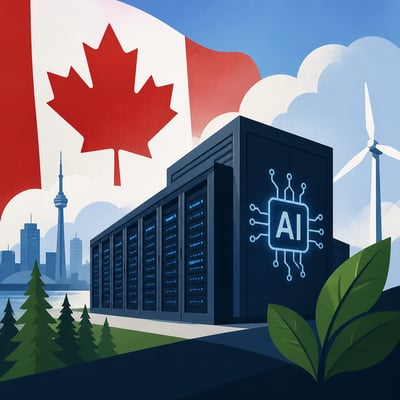
Meta plans to build a 1-gigawatt data center in Sturgeon County, Alberta, its first in Canada, with an investment reported at about C$13 billion or US$9 billion and a potential expansion to 1.8 gigawatts. Meta will fund new generation and grid infrastructure, while Pembina Pipeline and partners are advancing the 932-megawatt Greenlight natural-gas power plant, expected to operate in 2030 and support the site under a long-term agreement. The project could accelerate Alberta’s data center ambitions and create new demand for Western Canadian gas, but it also highlights a tension between the province’s fossil-fuel-based power strategy and Canada’s clean-energy goals.
First Article: 05/10/26
Latest Article: 07/09/26
Summary
- Meta plans its first Canadian data center in Sturgeon County with initial capacity of 1 gigawatt and a possible expansion to 1.8 gigawatts.
- Meta says it will fully fund new generation and grid infrastructure for the site, which could use electricity comparable to 800,000 homes.
- Pembina Pipeline and partners are advancing the 932-megawatt Greenlight natural-gas plant, with commercial operation expected in 2030.
- Greenlight is expected to require about 150 million cubic feet of natural gas per day and create additional demand for Western Canadian producers.
- Alberta is offering data center developers the option to build their own power sources to bypass grid-capacity constraints and is targeting C$100 billion in investment.
- The development supports Alberta’s low-cost, fast-connection pitch but contrasts with Canada’s stated preference for clean electricity and lower emissions.
- Meta says its facility will use closed-loop liquid cooling and invest in clean and renewable energy to offset electricity use.
History
The main update is that Meta’s Alberta project now includes a possible scale-up to 1.8 gigawatts, while the supporting power plan has firmed up around a 2030 Greenlight natural-gas plant and interim supply from Capital Power. The framing also shifts slightly toward Alberta’s broader data-center recruitment push and explicit clean-energy tension.
The story has shifted from a broad provincial competition over data center power to a concrete hyperscale commitment: Meta is now planning a 1-GW facility in Alberta backed by company-funded generation and grid infrastructure. That makes the power-policy tradeoff more immediate, while also introducing a much larger natural-gas demand and a clearer implementation timeline.
Featured
Timeline: 61 Days
Hover over any logo to see coverage summary, click for full article.