
 Climate
 Privacy
 Bob Dylan
 Drones
 Data Centers
 AI Governance
 2026 Maine Senate Race
Counties Pause Data Center Projects
Coverage from Montgomery Community Media, KETV, and others
Articles
45
Active Days
78
The Topic
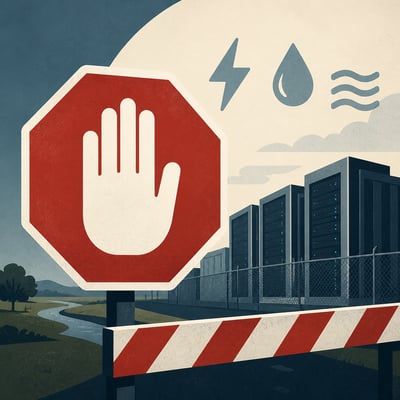
Counties in Maryland, Nebraska, and New Mexico are considering or adopting moratoriums and new rules for data center projects before approving additional development. Officials and residents are focusing on water consumption, electricity demand, grid reliability, land use, environmental impacts, and whether promised jobs and tax revenue justify local costs. The actions could delay proposed campuses while counties develop siting standards, impact studies, and community-benefit requirements.
First Article: 05/11/26
Latest Article: 07/27/26
Summary
- Santa Fe County adopted an 18-month moratorium and expanded review to projects using one megawatt or more.
- Cass County, Nebraska, is considering both an 18-month permitting pause and zoning rules after opposition to a proposed Tenaska-linked project.
- Montgomery County, Maryland, is weighing whether to extend a six-month construction moratorium for up to two years.
- Water use, electricity demand, grid reliability, utility costs, and land-use impacts are recurring issues across the local debates.
- Supporters of development point to construction jobs, tax revenue, and potential community growth, but project specifications and long-term staffing benefits remain disputed.
- Several counties are using pauses to commission studies, gather public input, and establish permanent standards before approving projects.
History
The biggest update is that Santa Fe County has now moved from consideration to enacted action, adopting an 18-month moratorium and lowering the review threshold for data centers. Elsewhere, Cass County’s debate has sharpened into a proposed permitting pause plus zoning rules, while Montgomery County is still weighing an extension.
The story has broadened from a general pattern of county moratoriums in a few Midwest states to a more concrete set of local actions in Maryland, New Mexico, and Nebraska, with some measures now formally enacted or actively under review. The emphasis has also shifted toward specific project-level scrutiny, especially around the Cass County Tenaska-Google proposal and its land, water, and utility implications.
Featured
Timeline: 78 Days
Hover over any logo to see coverage summary, click for full article.