History
07/28/20260 new articles
The story has broadened from general opposition to a more organized, multi-stakeholder backlash, with utilities/regulators now explicitly part of the dispute. The current version also sharpens the policy angle by emphasizing stricter scrutiny, disclosure, and enforceable community-benefit terms alongside moratoriums and permit fights.
07/27/20266 new articles
The story has broadened from a general political dispute over data centers into a more explicit fight over community control, with stronger emphasis on tribal consultation, local decision-making, and project delays. New reporting also sharpens the opposition side by naming additional political actors and highlighting that several projects are already being blocked or slowed.
- More than a dozen projects elsewhere have reportedly faced delays or local blocks.
- Texas candidates and officials are explicitly using data centers as campaign issues.
- Tribal consultation has become a central point of conflict.
- Supporters argue blocking projects could hurt U.S. AI competitiveness.
07/25/20267 new articles
The story has shifted from a broad pattern of opposition to a more specific political and regulatory fight in a few key jurisdictions, especially Texas and New York. New tribal actions, a statewide New York pause, and more explicit disclosure and community-benefit demands make the dispute look more operational and enforceable than before.
- Texas has become the central political battleground.
- Gov. Greg Abbott is promoting investment while considering new regulation.
- New York imposed a one-year pause on AI data center construction.
- Seminole, Muscogee, and Cherokee Nations have taken different formal actions.
- Residents are demanding earlier disclosure and enforceable community benefits.
07/24/202655 new articles
The story has widened from general local resistance into a more explicit, politically organized fight over siting authority, utility cost allocation, and community consent. The biggest shift is that moratoriums and permit pauses are now paired with sharper state-level rules and tax/community-benefit measures, making regulatory control the central bottleneck.
- Tax changes and community-benefit requirements are now part of state responses.
- Zoning denials and council fights are delaying or blocking projects.
- Interconnection delays are now explicitly cited as a grid constraint.
- Bulk-system risk warnings have entered the reliability debate.
- The debate now centers on community consent and siting authority.
07/02/20265 new articles
The story has shifted from broad resistance to a more concrete policy fight over how AI data centers are permitted, taxed, and connected to power and water systems. The added emphasis on projects above 20 MW and on federal, state, and local pauses suggests the backlash is becoming more operational and restrictive.
06/28/202612 new articles
The story has shifted from a broad account of local resistance to a more detailed policy fight over how AI data centers are permitted, taxed, and connected to power grids. It now foregrounds utility cost allocation, local consent, and specific political actors and projects shaping the dispute.
06/23/2026Topic Formed
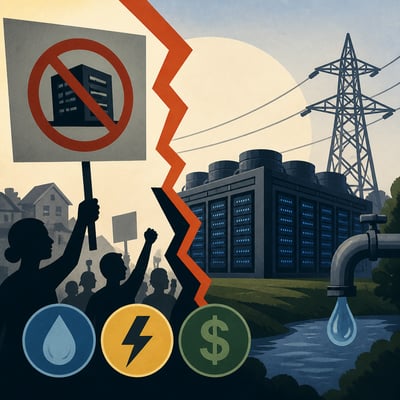
AI data centers are facing intensifying local and state resistance over zoning, water use, electricity demand, and who pays for infrastructure. The backlash has moved from neighborhood meetings and ballot fights into legislative moratoriums, utility-cost disputes, and election politics. At the same time, some reporting argues the economic benefits can be real and that the central issue is where and how facilities are built rather than whether they should exist at all.

 Climate
 Privacy
 Bob Dylan
 Drones
 Data Centers
 AI Governance
 2026 Maine Senate Race