History
07/24/20263 new articles
The story now places electricity and grid upgrades on roughly equal footing with water scarcity, emphasizing that efforts to cut water use can raise power demand and project costs. It also broadens from Arizona water debates into a wider regulatory and utility-connection issue affecting local approval processes.
07/23/20260 new articles
The story has sharpened from a broad water-and-power sustainability debate into a more specific U.S. permitting and infrastructure conflict centered on large AI data centers. The biggest new wrinkle is the explicit linkage to utility cost allocation, local hookup failures, and larger proposed loads that may strain approval timelines.
- Beale Infrastructure’s Marana campuses are estimated to require 1,100 to 1,500 megawatts.
- QTS’s Fayetteville project faced a billing and hookup failure.
- States and municipalities are considering caps and temporary moratoriums.
- The dispute now centers on connection timelines and local approval risks.
- The scope now explicitly includes Texas and other U.S. data center markets.
07/23/20261 new articles
The story has broadened from a water-and-power siting dispute into a more explicit AI-driven development and policy issue, with greater emphasis on utility-cost allocation and local permitting decisions. New details also show specific projects and operators moving into more concrete scrutiny over disclosure, replenishment, and infrastructure costs.
- AI-related growth is intensifying pressure on water and electricity systems.
- Operators are pursuing water replenishment commitments.
- Utility connection costs are now a central concern.
- Project approvals and local elections are shaping data center development pace.
- Project Blue and Marana are now focal dispute sites.
07/22/202610 new articles
The story has broadened from a water-disclosure and approval dispute into a wider policy fight over AI data centers’ combined water, power, and infrastructure impacts. Arizona has emerged as the clearest test case, with operators, regulators, and utilities now confronting concrete cost-sharing and permitting questions.
- Arizona has become the prominent test case for data center water and power strain.
- Air cooling and closed-loop systems can reduce water use but raise electricity demand.
- States are now considering moratoriums, conservation standards, and incentive limits.
- Large projects are advancing despite opposition by promising jobs and tax revenue.
- Billing failures and limited disclosure are worsening distrust over projected resource use.
06/29/20260 new articles
The story has broadened from a Georgia-specific water-billing dispute to a wider policy and permitting issue around data center water transparency. California now drives the narrative, with lawmakers, researchers, and local opponents pushing disclosure and approval rules, while Georgia and Arizona serve as supporting examples of the same cost and cooling debates.
- California researchers found many projects provide little usable water data.
- Lawmakers are advancing reporting bills after an earlier veto.
- Opposition is growing in Kern County, Imperial Valley, and Monterey Park.
- QTS and Arizona debates highlight wastewater cooling and cost shifting.
06/28/2026Topic Formed
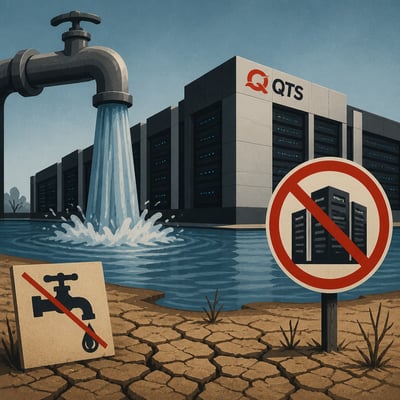
This topic centers on a large QTS data center campus in Fayetteville, Georgia, after county investigators found millions of gallons of water had been used through connections that were not properly billed or tracked. The dispute drew attention because residents were being asked to conserve water during drought conditions while the campus remained the county's largest water user. It has also accelerated local pushback, including a citywide ban on new data centers in Fayetteville.

 Climate
 Privacy
 Bob Dylan
 Drones
 Data Centers
 AI Governance
 2026 Maine Senate Race