
 Climate
 Privacy
 Bob Dylan
 Drones
 Data Centers
 AI Governance
 2026 Maine Senate Race
Michigan Data Center Rules Take Shape
Coverage from Washington Post, JD Supra, and others
Articles
18
Active Days
70
The Topic
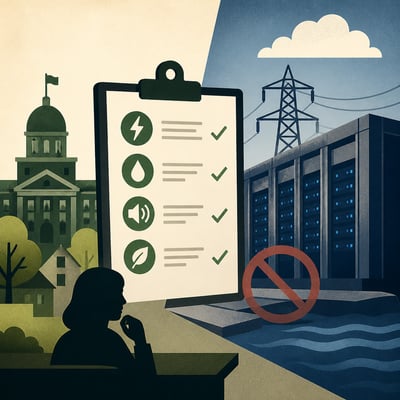
Michigan cities and state lawmakers are moving to regulate large data centers as developers pursue hyperscale projects tied to cloud and AI computing. Detroit, East Lansing, and other communities are using moratoriums or drafting local rules, while proposed state legislation would address water consumption, ratepayer costs, clean-energy sourcing, labor standards, public transparency, and community benefits. The debate centers on whether Michigan can capture construction and tax revenue without shifting infrastructure, utility, or environmental costs to residents.
First Article: 05/15/26
Latest Article: 07/23/26
Summary
- Detroit and East Lansing have used or considered moratoriums because existing zoning does not clearly address data centers.
- Michigan Senate Democrats proposed statewide limits on water use, new permitting thresholds, annual reporting, and protections against shifting service or decommissioning costs to residents.
- Large projects in Saline Township and Van Buren Township are intensifying debate over electricity demand, cooling water, noise, and local infrastructure.
- Detroit is drafting city-specific rules and opposing unmonitored use of municipal water for data center cooling.
- Proposed measures would require or encourage community benefits agreements, restrict public-sector nondisclosure agreements, and set labor standards for projects.
- Michigan’s tax incentives and potential construction and tax-base gains are being weighed against uncertain permanent employment and possible utility-cost increases.
History
The story now centers more explicitly on statewide regulation of data centers, with Michigan lawmakers and cities adding cleaner, broader policy demands around transparency, labor, and community benefits. The development also sharpens the focus on specific large projects as drivers of local concerns over power, water, and infrastructure costs.
Detroit moved from general safeguard discussions to an approved development pause and specific water protections, while East Lansing formalized a six-month moratorium. The state-level package also became more defined, adding clean-energy, curtailment, and labor requirements alongside the water and cost rules.
Featured
Timeline: 70 Days
Hover over any logo to see coverage summary, click for full article.