
 Climate
 Privacy
 Bob Dylan
 Drones
 Data Centers
 AI Governance
 2026 Maine Senate Race
Nevada Data Centers Strain Water And Power
Coverage from Sierra Nevada Ally, The Nevada Independent, and others
00/00/0000
Articles
19
Active Days
77
The Topic
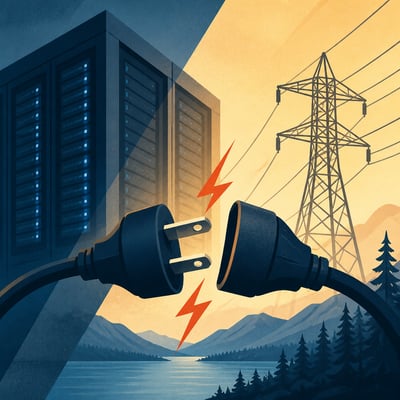
Nevada is attracting large data center projects around the Reno-Sparks corridor, supported by industrial land, tax incentives, and new power investments. The expansion is increasing pressure on electricity supply, transmission, water resources, and local permitting, with impacts extending to Lake Tahoe customers and communities downstream of the development areas. Regulators and residents are seeking more public review, while companies and utilities are proposing new transmission, geothermal, solar, and battery projects to meet demand.
First Article: 05/11/26
Latest Article: 07/26/26
History
The story is largely steady, but it now emphasizes stronger public scrutiny and adds a more explicit water-demand estimate for Northern Nevada growth. The TS2 project also appears to have advanced procedurally with a federal right-of-way approval, even as review concerns persist.
The story has broadened from a Lake Tahoe utility transition into a larger statewide conflict over data center expansion, power buildout, water use, and permitting. New details show active policy and permitting responses, including Reno’s permit pause and setbacks for at least one project over water review concerns.
- NV Energy now projects 5,900 megawatts of added demand from 12 planned facilities by 2033.
- Amazon plans 700 megawatts of carbon-free Nevada projects for future data centers.
- Reno approved a 30-day pause on new data center permits within city limits.
- TS2 near Boulder City faced a procedural setback over water and federal review questions.
- The story now includes statewide concerns beyond northern Nevada, including Boulder City.
The story is now more explicit that NV Energy’s Lake Tahoe supply pullback has a concrete May 2027 deadline and will require a replacement procurement process, while the data center buildout in Storey County continues apace. The framing has also sharpened around Tahoe’s limited grid options and the possibility that the transition is not solely a reaction to the latest data center surge.
- NV Energy’s Lake Tahoe supply arrangement is expected to end or sharply shrink by May 2027.
- Liberty Utilities must secure replacement power through procurement.
- Lake Tahoe lacks a direct California grid connection.
- Fleet and Tract are building a $4.6 billion campus in Storey County.
- NV Energy says the Tahoe transition was planned years earlier.
The story has shifted from a utility-supply and transmission bottleneck to a broader system-planning conflict driven by still-growing data center construction. The new version adds active buildout, tighter local permitting, and more explicit concern over water and backup-power infrastructure.
- NV Energy is shifting capacity toward higher-priority load needs.
- South Valley and RNO2 campuses are moving forward.
- Reno is moving toward a data center moratorium.
- State and county leaders continue supporting development elsewhere.
- Water use, closed-loop cooling, and backup generation are now central concerns.
The story is now more explicitly about a concrete replacement-power problem: NV Energy’s planned service changes for Liberty Utilities by May 2027, and the timing of Greenlink West, have become the central near-term constraints. The framing also broadens slightly to emphasize cost, rate impacts, and regulatory review pace, alongside the existing land-use and water pressures.
The story has broadened from a utility-and-transmission squeeze into a wider policy fight over data center growth, adding water use, tax incentives, and land-use approvals as active constraints. Local resistance also appears more organized, with moratorium requests and public hearings entering the picture.
The story now emphasizes that the Lake Tahoe supply transition is not just about replacement power, but about a constrained utility handoff tied to NV Energy's exit, balancing-authority limitations, and active regulatory scrutiny. It also adds a clearer market signal: large operators like Amazon are still securing major clean-energy deals as data-center load grows.
The story has shifted from a general Northern Nevada power-strain narrative to a more concrete Lake Tahoe transition problem, with Liberty Utilities now actively seeking expedited approval to buy replacement power ahead of NV Energy’s May 2027 exit. At the same time, the current version adds that NV Energy is expanding generation and grid capacity, sharpening the sense that supply-side buildout is now part of the response.
- Liberty Utilities is seeking expedited California regulatory approval.
- Replacement power would cover roughly 49,000 Lake Tahoe-area customers.
- NV Energy is expanding new generation and grid capacity.
- Current reporting extends transition steps into 2028.
- The story is now framed more narrowly around one near-term utility transition.
The story has broadened from a Lake Tahoe supply-gap problem into a wider Northern Nevada power-planning issue shaped by data center load growth, large clean-power procurement, and transmission timing. The core risk remains the same, but the current version emphasizes active utility repositioning and regulatory friction rather than just an impending service exit.
- Amazon signed a 700 MW Nevada clean-energy agreement.
- NV Energy is courting large clean-power deals.
- Greenlink West's 2027 timeline leaves little margin.
- California-side oversight requests are active.
- AI and cloud facilities are competing for grid capacity.
Lake Tahoe is facing a potential electricity supply gap after NV Energy said it will end service to Liberty Utilities' California territory by May 2027. Reporting links the decision to rising power demand from Northern Nevada data centers and the limited transmission options serving the region. The issue is also shaped by a fragmented regulatory setup that splits responsibility across Nevada and California.