History
07/23/20260 new articles
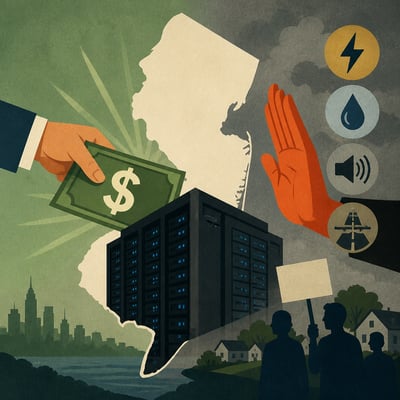
The story has shifted from a general reassessment of AI data center incentives to a more concrete policy direction: New Jersey is now actively reducing future tax support while locking in rules that push grid costs and operational safeguards onto developers. CoreWeave’s approved Kenilworth project remains the anchor example, but the broader debate has hardened around whether incentives should continue at all.
07/22/20261 new articles
The biggest shift is from a general debate over AI data center incentives to concrete state action: New Jersey paused new applications for the program and advanced laws that make future projects pay their own grid costs and face tighter operating rules. The approved Kenilworth CoreWeave project is now the clear exception, while the policy fight is centered on uncommitted incentives.
- NJEDA paused new applications for the Next New Jersey Program-AI.
- New energy laws require AI data centers to cover their grid costs.
- The Kenilworth CoreWeave facility is $1.8 billion and targeted for 2027 operations.
- Roughly $250 million in uncommitted credits may be eliminated or redirected.
- Municipalities and residents have moved into litigation over data center impacts.
06/29/20262 new articles
The story has broadened from a backlash against AI data center incentives into a more developed policy fight over how New Jersey should regulate them. The current version adds concrete regulatory proposals, stronger business and labor defenses of the credits, and confirmation that the Kenilworth project is moving ahead.
- Sherrill administration proposes energy-use transparency rules.
- Grid-upgrade contributions and clean-energy requirements are under consideration.
- NJBIA and IBEW Local 102 now openly defend the incentives.
- Kenilworth project is approved and under construction.
- Some municipalities have already blocked or sharply restricted data centers.
06/23/2026Topic Formed
New Jersey is confronting a sharp reversal around its AI data center incentive strategy. After creating large tax credits to attract AI infrastructure, lawmakers, municipalities, and advocacy groups are now pushing for tighter oversight, limits, or cuts to those incentives amid concerns about electricity demand, water use, noise, and local infrastructure strain. The debate has become a test of whether the state can support AI investment without shifting costs onto communities and utility systems.

 Climate
 Privacy
 Bob Dylan
 Drones
 Data Centers
 AI Governance
 2026 Maine Senate Race