History
07/27/20262 new articles
The story is now more explicitly framed as a broad policy and local-governance fight, not just a wave of resident resistance. The new version adds that moratorium and oversight proposals have spread across state legislatures, but few had actually been enacted.
07/25/20262 new articles
The story has moved from general resistance to a more quantified, nationwide escalation, with newly reported project delays and a much larger organized opposition network. Virginia remains central, but the update adds sharper evidence that backlash is now affecting approvals and generator policy at scale.
- 75 U.S. projects worth about $130 billion were blocked or delayed in Q1 2026.
- Grassroots opposition groups reportedly reached 833 across 49 states.
- PJM authorized data centers to run backup generators during grid strain.
- Transparency of approval negotiations became a specific concern in Chesterfield and Culpeper.
07/24/20267 new articles
The story has shifted from broad U.S. opposition to a more specific, more procedural fight centered on Virginia and a wider set of legal and regulatory challenges. What stands out now is that resistance is not just about complaints over impacts, but increasingly about moratoriums, lawsuits, rezoning, and utility-planning disputes.
- Virginia is identified as the clearest battleground.
- Court challenges and rezoning disputes are now part of the fight.
- Ballot efforts and moratoriums are appearing in both blue and red states.
- Utilities and grid actors are now central to the story.
07/22/2026Topic Formed
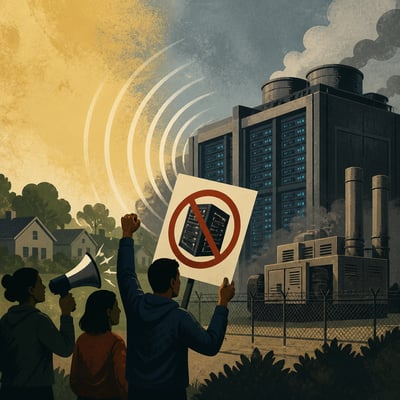
Data center projects across the United States are facing stronger community resistance, project delays, moratorium proposals, and demands for clearer information about electricity, water, pollution, noise, and local benefits. A Data Center Watch analysis cited at least 75 blocked or delayed projects worth about $130 billion in the first quarter of 2026, while opposition groups more than doubled to 833 across 49 states. The disputes are also reshaping politics and permitting debates as officials promote data centers for jobs and tax revenue while residents and environmental groups challenge their local costs, particularly where diesel or gas generators support operations.

 Climate
 Privacy
 Bob Dylan
 Drones
 Data Centers
 AI Governance
 2026 Maine Senate Race