
 Climate
 Privacy
 Bob Dylan
 Drones
 Data Centers
 AI Governance
 2026 Maine Senate Race
Florida Counties Pause AI Data Centers
Coverage from E&E News by POLITICO, The Verge, and others
Articles
37
Active Days
70
The Topic
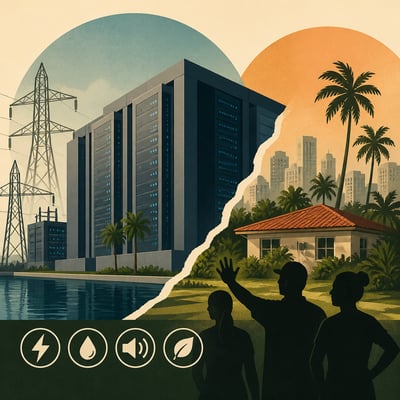
Florida counties and municipalities are slowing large AI data center projects through temporary moratoriums, rejected applications, withdrawn proposals, and additional reviews. Officials and residents are focused on potential demands for water and electricity, effects on nearby communities, transparency, and whether utilities or taxpayers could bear infrastructure costs. A state law signed by Gov. Ron DeSantis preserves local control and requires some large facilities to address utility and water impacts, but smaller projects may fall outside its provisions.
First Article: 05/16/26
Latest Article: 07/24/26
Summary
- More than a dozen Florida jurisdictions, and possibly more than 20 according to broader counts, have passed or debated data center moratoriums.
- Palm Beach County rejected the proposed expansion of Project Tango, while other large projects in Citrus, Okeechobee, St. Lucie, and Martin counties were stopped, withdrawn, or delayed.
- Local reviews focus on cooling-water demand, wastewater capacity, grid effects, environmental burdens, and proximity to homes or schools.
- A Fort Meade hyperscale project remains approved but still awaits water and wastewater permits.
- Florida’s May data center law requires certain large facilities to cover their own electricity costs and address water use, while leaving zoning and permitting authority with local governments.
- Smaller Miami-Dade facilities have faced less opposition than hyperscale projects but have raised concerns about disclosure, notification, and the cumulative effects of clustered sites.
- Opposition is crossing party lines even as state and national politicians disagree over whether Florida should continue competing for data center investment.
History
The story now places more emphasis on the state-law framework: Florida’s May law is described as preserving local zoning and permitting authority while imposing only limited utility and water requirements on certain large projects. It also broadens slightly to include fresh concerns around disclosure and clustered smaller Miami-Dade facilities, while confirming the overall slowdown of hyperscale development.
The story has sharpened from a broad pattern of local pushback into a more concrete accounting of specific rejections, delays, and water-permit bottlenecks across Florida. It also now explicitly connects the local fight to new state rules and the political effort to attract data-center investment while limiting utility and water costs.
Featured
Timeline: 70 Days
Hover over any logo to see coverage summary, click for full article.