
 Climate
 Privacy
 Bob Dylan
 Drones
 Data Centers
 AI Governance
 2026 Maine Senate Race
Europe Expands Low-Cost Drone Defenses
Coverage from The Guardian, The Irish Times, and others
Articles
7
Active Days
71
The Topic
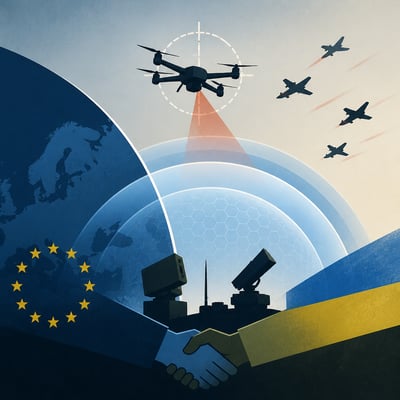
European militaries and defense companies are expanding low-cost ways to detect, jam, intercept, and destroy attack drones, drawing heavily on lessons from Ukraine and the growing use of Shahed-style systems. New efforts include interceptor drones, AI-assisted targeting, cheaper missiles, and layered defenses for military forces, cities, and high-profile events. The shift is also driving partnerships, domestic production, and pressure to reform procurement so systems can be adapted and manufactured at battlefield speed.
First Article: 05/01/26
Latest Article: 07/10/26
Summary
- Ukraine is supplying combat-tested designs and operational lessons for European counter-drone programs.
- Interceptor drones and lower-cost missiles are being developed to reduce the cost imbalance between inexpensive attack drones and traditional air-defense weapons.
- AI systems are beginning to automate target detection and interception, while human operators generally retain target-selection or engagement authority.
- Ireland is combining jamming, net-firing interceptors, guns, and missiles to protect EU presidency events and surrounding airspace.
- European companies are increasing local production and seeking more sovereign supply chains for drones, interceptors, and components.
- Rapid battlefield adaptation is exposing a mismatch between fast-changing drone technology and slower military procurement processes.
- Air-defense firms are linking Ukrainian interceptor technology with European command-and-control and integrated air-defense systems.
History
The story broadens from mainly interceptors and event protection to a more integrated European counter-drone push covering detection, jamming, layered defenses, and domestic production. It also adds clearer evidence of industrial partnerships and procurement reform pressure as militaries try to adapt at battlefield speed.
The story now places stronger emphasis on Ukraine as the source of combat-tested designs and on European integration efforts, especially Airbus-linked command-and-control partnerships and Ireland’s event-security deployment. It also sharpens the procurement angle by showing systems moving from testing into acquisition and fielding.
Featured
Timeline: 71 Days
Hover over any logo to see coverage summary, click for full article.